
Canadian Children's Rights Council Inc.
Conseil canadien des droits des enfants inc.
www.CanadianCRC.com

Canadian Children's Rights Council Inc. - Conseil canadien des droits des enfants inc.

Child Rights - Virtual Library, Resource Centre, Archives and Advocacy

Skip Navigation Links

Family on beach

Canadian Broadcasting Corporation logo

Supreme Court upholds spanking law

Canadian Broadcasting Corporation (CBC), January 30, 2004

OTTAWA - Canada's top court has upheld a law allowing parents to spank their children and set guidelines outlining "reasonable limits" in a case led by a Saskatoon social work professor.

In a 6-3 decision, the Supreme Court of Canada refused to repeal Section 43 of the Criminal Code that allows parents and school teachers to physically discipline children in their care by using "reasonable" force.

Ailsa Watkinson is the Saskatoon social work professor who took the issue to Canada's top court nearly a decade ago, and eventually partnered with Canadian Foundation for Children, Youth and the Law, an Ontario organization that took up the cause.
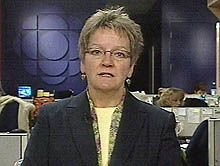
Alisa Watkinson is disappointed with the judgement

Alisa Watkinson is disappointed with the judgement

Alisa Watkinson is disappointed with the judgement

Watkinson was hoping the Supreme Court would strike down the law and give children the same rights as everyone else by protecting them from physical assault.

She was disappointed with the decision to uphold the law saying that it's misguided for the court to put all these qualification of what is acceptable and what isn't.

"I find them so strange," she said, "that we sit there and dissect it to whether or not we hit a child on the head...don't use belts, you don't use instruments...it really misses the point, which is children's rights."

But the president of the Saskatchewan chapter of REAL women sees things differently. Cecilia Forsyth says most parents know the difference between abuse and gentle physical punishment.
"Section 43 of the CC has permitted parents to teach their children to learn right from wrong for over a century," she said, "and parents have the primary duty and responsibility for the upbringing the discipline of their children. And this law strikes a good balance between protecting children and supporting parental authority.

In its decision, the court ruled that reasonable corrective force can be used against children between the ages of two and 12 years old.

The court said it was unacceptable to hit a child with an object, like a belt or paddle. Blows and slaps to the child's head would also be unacceptable.

For corporal punishment to be legally acceptable, it must involve only "minor corrective force of a transitory and trifling nature," the court ruled.
Lawyers for the Canadian Foundation for Children, Youth and the Law argued that the Criminal Code provision is a violation of the Charter of Rights and Freedom, and makes children "second class citizens."

"This case is about the right of children not to be hit, a right that in a modern, 21st Century democracy should be unquestioned," said lawyer Paul Schabas when he argued the case before the Supreme Court.

But the federal government argued Section 43 should stay in place, saying the law strikes a balance between the needs of parents and the rights of children.

The Justice Department says it does not advocate spanking, but that repealing the law could make parents liable to criminal charges each time they spank their children.

Many teachers and education officials have defended keeping Section 43 as it is.

Terry Price of the Canadian Teachers Federation, a group that had intervenor status in the case, worried that repealing Section 43 could result in teachers being charged with assault for breaking up a schoolyard fight.

"And I as a parent would certainly want to know that someone is going to intervene if my child was involved in an altercation," said Price.

Section 43 of the Criminal Code was passed in 1892 and has been amended several times.

The Ontario Court of Appeal upheld Section 43 in January 2002. The court ruled that parents and teachers are free to spank children for disciplinary purposes if they limit themselves to "reasonable force."


U.N. Convention on the Rights of the Child (UNCRC) U.N. Convention on the Rights of the Child (UNCRC) (1989) U.N. Declaration of the Rights of the Child (1959) Canada's National Child Day - Gov't Obligations to Educate the Public Canada's Reports to the U.N. Committee on the Rights of the Child 2006 Canada's Reports to the U.N. Committee on the Rights of the Child 2003 Canada's Reports to the U.N. Committee on the Rights of the Child 1995 Canada's Reports to the U.N. Committee on the Rights of the Child 1995 Canada's Reports to the U.N. Committee on the Rights of the Child 1995 U.N. Convention on the Rights of the Child - Application in Canadian Courts Government of Canada's Plan of Action - 2004 U.N. Study-Violence Against Children Fetal Rights and the UNCRC Scholarly Submission
Women & Men Reproductive Choice About Pro-Choice
Parental Alienation Syndrome Parental Alienation Overview The Special Joint Committee on Custody and Access (1998) - Parental Alienation Parental Alienation - Canadian Court Rulings Parental Alienation Court Rulings - US and other countries Parental Alienation Studies and Research Parental Alienation Awareness Day - April 25 Books About Parental Alienation Parental Alienation - Documenting The Evidence Parental Alienation - Using a Parenting Coordinator About Parental Alienation Parental Alienation - What Canadian Health Professionals Are Doing About It. Parental Alienation Dos and Don'ts Certain Feminist Organizations Deny Parental Alienation Exists
Infanticide / murdering children Mothers who kill their children Infanticide - Criminal Code of Canada Offence UN position and CCRC position
Newborn Baby Abandonment Laws Child Abandonment Laws
Scholarly Submissions University &College About Submissions Read Submissions
Child Identity Rights and Paternity Fraud Baby Naming Case - Supreme Court of Canada Paternity Fraud Infidelity NON-Invasive Prenatal DNA Paternity Testing Paternity testing Blood type comparison can disprove paternity Mandatory paternity testing - Position Statement by the Canadian Children's Rights Council Liam Magill - High Court of Australia Paternity Fraud case Paternity Fraud- Criminal Code of Canada Child Identity Rights - Frequently Asked questions (FAQs) Finding your birth parents
Children & Sex - Age of Consent Age of consent Children having children
Child / Youth  Criminal Justice Youth Criminal Justice Act (YCJA) (2003) Read the Act YCJA - History of the Bill, Briefs, testimony, Parilamentary Transcripts YCJA - Background Information- Canada's Department of Justice Youth Criminal Justice Youth Crime in Canada Youth Jails in Canada Supreme Court of Canada - Youths Charged as Adults - May 16, 2008
Canadian Children Living in  Poverty Child Financial Support (Poverty) Child poverty Homeless Children in Canada Aboriginal Child Poverty
Adoption and Human Identity Adoption News Birth fathers ignored Adoption Laws Finding your birth parents New Brunswick's Adoption Success
Corporal Punishment Hitting and Spanking Child Abuse / Neglect Overview Canada Statistics International SpankOut Day April 30th Assaulting children to discipline them - Corporal Punishment
Child Abuse and Child Protective Services Child Abuse / Neglect Overview Canada Statistics Parent Abuse committed by Youths Child Hate Crimes Shaken Baby Syndrome The Invisible Boy: Revisioning the Victimization of Male Children and Teens 1996 - Health Canada Genital Mutilation/ Circumcision Female Sexual Predator Awareness Karla Homolka - Child Killer and Sexual Predator Bullying Parental Alienation Butterbox Babies Cananda's Aboriginal Residency School
Family Law - federal and provincial / terr. Canadian Family Law History Special Joint Committee on Custody and Access 1998 Hague Convention - Order or Chaos Fatherless Canada Child Relationship Support Child Financial Support Children's Rights in Family Law
Education About Child Rights Educators Teaching democracy
UN - Rights of Persons with Disabilities - 2006 About the UN Convention for the Rights of Disabled Persons Read the UN Convention for the Rights of Disabled Persons
Special Days of the Year - Mark your Calendar Parental Alienation Awareness Day - April 25 April 30th - International SpankOut Day June 21st - Canada's National Aboriginal Day August 12th UN International Youth Day November 20th - Canada's National "Child Day" - Gov't Obligations to Educate the Public December 3rd - International Day of Disabled Persons December 10th - Anniversary of the Universal Declaration of Human Rights
Universal Education of Children Ontario, Canada discriminates by publicly funding certain religious schools Early childhood education and care Grade school University / College
Universal Child Health Care Services Child Health Care
Misc. Topics Relating to Child Rights Youth Suicide Anorexia Nervosa ADHD-Ritalin Smoking