Infanticide is justifiable in some cases, says ethics
professor
The Daily Telegraph, London, UK, By Elizabeth Day, January
25, 2004
One of British medicine's most senior advisers on medical
ethics has provoked outrage by claiming that infanticide is
"justifiable".
Professor John Harris, a member of the British Medical
Association's ethics committee, said that it was not
"plausible to think that there is any moral change that occurs
during the journey down the birth canal" - suggesting that
there was no moral difference between aborting a foetus and
killing a baby.
The professor's comments were made during an unreported debate
last week on sex selection, which was held as part of the
Commons Science and Technology Committee's consultation on
human reproductive technologies.
Prof Harris, who is also a professor of bioethics at the
University of Manchester, was asked what moral status he
accorded an embryo and he endorsed infanticide in cases of a
child carrying a genetic disorder that remained undetected
during pregnancy.
He replied: "I don't think infanticide is always
unjustifiable. I don't think it is plausible to think that
there is any moral change that occurs during the journey down
the birth canal."
He declined to say up to what age he believed infanticide
should be permissable.
Prof Harris, who is one of the founders of the International
Association of Bioethics and the author of 15 books on the
ethics of genetics, was condemned for his remarks.
Julia Millington, political director of the
ProLife Party
Julia Millington, the political director of the ProLife Party,
who posed the original question to Prof Harris, called the
admission "absolutely horrifying".
"Infanticide is murder and is against the law. It is
frightening to think that university students are being
educated by somebody who endorses the killing of newborn
babies and equally worrying to discover that such a person is
also a member of the ethics committee of the British Medical
Association."
She continued: "Prof Harris is the Establishment's preferred
bioethicist, a member of the Human Genetics Commission, and
has acted as ethical consultant to the Department of Health
and to numerous international bodies. In such a climate is it
any wonder that a baby has been aborted in the UK at seven
months for a cleft palate?"
Prof Harris said that he stood by his remarks, which he
claimed had been elicited "in response to goading" from
pro-life campaigners.
"People who think there is a difference between infanticide
and late abortion have to ask the question: what has happened
to the foetus in the time it takes to pass down the birth
canal and into the world which changes its moral status? I
don't think anything has happened in that time.
"It is well-known that where a serious abnormality is not
picked up - when you get a very seriously handicapped or
indeed a very premature newborn which suffers brain damage -
that what effectively happens is that steps are taken not to
sustain it on life-support.
"There is a very widespread and accepted practice of
infanticide in most countries. We ought to be much Read More ..
upfront about the ethics of all of this and ask ourselves the
serious question: what do we really think is different between
newborns and late foetuses?
"There is no obvious reason why one should think differently,
from an ethical point of view, about a foetus when it's
outside the womb rather than when it's inside the womb."
Prof Harris added that it was up to individual families to
make a decision on the future of their child and that he was
not concerned that such a course of action could lead to
infanticide for cosmetic reasons.
"I don't believe there is any such thing as a slippery slope,"
he said. "I think that we are always on one. It is our
responsibility not to avoid the moral choice.
"We shouldn't make a bad decision now because we fear it will
lead us to make another bad decision in the future. We should
make a good decision now and have the courage to believe we
will make a good decision in the future too."
The Rev Joanna Jepson, the Church of England curate who is
going to the High Court to try to block late abortions for
"trivial reasons" such as a cleft palate, said: "It is
frightening to hear anyone endorsing infanticide but it is
shocking when the person is responsible for teaching others."
"This affirms the need for an investigation into the practice
of abortion. We have already seen, in the cleft palate case,
how the law needs to provide Read More ..gorous protection for such
babies but, with medical practitioners such as John Harris at
work, there is no question of our fundamental need to reaffirm
the human value of every baby's life, no matter what its sex
or disability."
A spokeswoman for the British Medical Association said: "These
views of Prof Harris are personal views and do not reflect the
views of the committee or the BMA, which is utterly opposed to
the idea of infanticide."
Copyright of Telegraph Group Limited 2004
Read the double standard by the author of this article because the sex offender was female
The biased words highlighted below should be "sexual assault", "raped" or similar type words NOT "sexual relationship" or "had sex"
A trusted, even respected or beloved teacher is accused of having a
sexual relationship with a student.
What used to shock us, but is now much too commonplace, is that the
teacher is a woman.
Their names become tabloid headlines: Mary K. Letourneau, Debra
Lafave, Pamela Diehl-Moore and others.
And now two more cases, both local.
Jennifer Leigh Rice, a 31-year-old former Tacoma teacher, was charged
with having sex with a 10-year-old boy who had been in her fourth-grade
class. The boy's father says she lavished the boy with attention until
she was told not to come to their house anymore.
So she abducted the boy, police say, drove him to a highway rest stop
outside Ellensburg and had sex with him. After her arrest in early
August, Rice said she'd had sex with the boy four or five times,
including once when she sneaked into his house as his parents slept.
Earlier this year, former Tenino math teacher Dawn Welter, 38, was
charged with second-degree sexual misconduct after spending the night at
a motel with a 16-year-old female student. Her lawyer explained her
relationship with the student as "horseplay that became sexual."
Hundreds of them.... female teachers who sexually
assaulted 12 year old boys. Read about a lesbian tennis coach who sexually
assaulted her 13 year old female student.
Read how a 40 year old female sexual predator blamed a 7 year old boy whom she claimed was "coming on to me" and whom she "hoped to marry someday."
Read More ..
VANCOUVER - Canada's largest study into the sexual exploitation of street
kids and runaways has shattered some myths about who the abusers might be
- with the most surprising finding being that many are women seeking sex
with young males.
"Some youth in each gender were exploited by women with more than three
out of four (79 per cent) sexually exploited males reporting exchanging
sex for money or goods with a female," said Elizabeth Saewyc, associate
professor of nursing at the University of British Columbia and principal
investigator for the study conducted by Vancouver's McCreary Centre Society.
"I must admit it wasn't something we were expecting."
PITTSBURGH (AP) - A western Pennsylvania mother has been charged with
giving her 13-year-old daughter drugs and alcohol so the woman's
boyfriend could impregnate the girl without her knowing, police said
Thursday.
Shana Brown, 32, is no longer able to have children but wanted to
have a baby with her current boyfriend, Duane Calloway, said Uniontown
Police Detective Donald Gmitter. The pair decided to drug the girl so
Calloway, 40, could have sex with her, he added.
"There's some sick people on this case," Gmitter said.
Brown has been charged with endangering the welfare of a child,
turned herself in Thursday and was being held in the Fayette County
jail, police said. Brown's attorney did not return a call for comment.
Calloway faces several counts of attempted rape. He was arrested
Wednesday and remains in jail. It was not immediately clear whether he
had an attorney.
The three attacks occurred in Brown's home in Uniontown, about 50
miles south of Pittsburgh, according to the criminal complaint.
Because we assume women never commit child sexual abuse, we treat one who is accused with disproportionate disgust
The Guardian, UK
June 11, 2009
About 20 years ago, I gave a talk about sexual abuse to the RAF.
At the end, a young airman came up to me and said, "It's not just
men, you know," before hurriedly walking away. That pulled me up
sharp. Up till then, like most people working in the area of sexual
abuse, I'd always assumed the abusers were men.
This just isn't so. We can't be sure of the precise prevalence of
sexual abuse by women, as there hasn't been enough research into the
subject. Academics have just assumed it doesn't happened. But
conservative estimates suggest that 5% of girls and 20% of boys who
have reported being abused have been abused by women.
From my own research - I have had 800 cases reported to me - I
believe the more likely figure is that it is 20% of all sexual abuse
that is done by women.
It is women themselves who have done most to propagate this
conspiracy of silence. It has almost become a feminist axiom that it
is men who are to blame for abuse and that if women are in some way
implicated, it is only because they have somehow been forced or
controlled into doing so against their will. Again, this turns out
to be completely incorrect: 75% of the cases reported to me involved
women acting on their own.
Read More ..
Mainichi Daily News, Sakai, Osaka, Japan, November 26, 2006
SAKAI, Osaka -- A woman accused of cutting off her newborn son's private
parts in 2004 was ordered Monday to spend five years behind bars.
The Sakai branch of the Osaka District Court convicted Shizue Tamura,
27, a resident of Izumi, Osaka Prefecture, of inflicting bodily injury.
"The way she committed the crime was unprecedented, inhumane and
cruel," Presiding Judge Masahiro Hosoi said as he handed down the ruling.
Prosecutors had demanded an eight-year prison term.
Read More ..
After Plymouth case shocked the nation, police say number of women abusing children
The Guardian UK and The Observer
4 October 2009
Researchers from the Lucy Faithfull Foundation (LFF), a
child protection charity that deals with British female sex
offenders, said its studies confirmed that a "fair proportion" of
child abusers were women. Donald Findlater, director of research and
development, said results indicated that up to 20% of a conservative
estimate of 320,000 suspected UK paedophiles were women.
MORRISTOWN, N.J. - A 35-year-old seventh-grade teacher was charged with having sex with one of her students at least 20 times at the teacher's home.
Jodi Thorp, 35, surrendered to authorities Monday on charges of aggravated sexual assault, aggravated sexual contact and endangering the welfare of a child. Prosecutors claim she had sex with the boy at her Mendham home between June 2001 and September 2002. The boy is now 15.
A married primary schoolteacher was jailed for 15 months yesterday after admitting having sex with an underage
teenage boy.
Hannah Grice, 32, pleaded guilty at an earlier hearing to two counts of indecent assault on the boy, who was aged
14 and 15 at the time of the offences.
Sentencing her at Stafford crown court, Judge John Shand told Grice, from Cannock, Staffordshire, she had abused
her position of trust.
"Cases such as this are, of course, made worse by the fact that you were a member of the teaching profession," he
told her. "You should have been very sensitive indeed to child welfare issues." Grice was also ordered to register
as a sex offender for 10 years. Read More ..
Females Convicted of Sexual Assault automatically get
lighter sentences
The mother of one victim said after Bromiley was jailed: "If I could
get hold of her I'd kill her. She stole my son's childhood and he's now
in a terrible state and has threatened suicide. She got away lightly and
should have got at least 10 years."
Judge David Hale explained that he was constrained
by the law which only allows for specific charges to be brought when the
offender is a woman. Had she been male, he said, the sentence would have
been in double figures.
He said: "As a house mother you were in charge of children who were
mentally and educationally disadvantaged and you took your own advantage
of them for your own needs and sexual pleasure. This is the worst case of
a woman abusing children in her care any court in the land has had to face."
Read More ..
The Men's Project "Men
of Courage"
1st Ontario Provincial Conference on Male Sexual Victimizations.
It was held March 17-18, 2008
Sheraton Centre Hotel
Toronto, Ontario, Canada
The Men's Project, an Ottawa / Cornwall registered charitable service
provider with the assistance of a grant from the Ministry of the Attorney General, hosted
this conference.
About The Men's Project
From what was initially a volunteer run initiative, The Men's Project has
grown to become one of Canada's leading counselling and educational agencies
for men and their families, and in particular for all male survivors of
sexual abuse committed by males and females.
The Men's Project has witnessed incredible expansion of their funded services,
their
fee-for-service programs, and their training and consultation services.
Their mandate is "helping men
and their families build better lives".
Read More ..
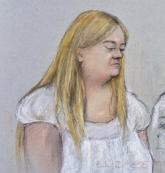
Vanessa George remanded in custody after crowds jeer from public
gallery and throw missiles outside court
The Guardian, UK
June 11, 2009
A nursery school worker was jeered and spat at when she appeared in
court today, charged with sexual assault and making and distributing
child abuse images.
Vanessa George, 39, who worked at the Little Ted's nursery in
Plymouth, was remanded in custody amid angry scenes in and outside the
city's magistrates court.
George, of Plymouth, faces three counts of sexual assault on girls
and one on a boy. She is also accused of making, possessing and
distributing indecent images of children.
Read More ..
A surprising 86% of survivors of sexual
abuse were not believed when they said the abuser was a woman.
Many myths were exposed, such as the one that women only sexually abused
when coerced by men - they in fact played the lead part. Also the myth that
women are incapable of cruelty - what was shown was beyond belief.
Women commit 25% of all child sexual abuse
250,000 children in UK have been sexually abused by women
Women in our society have been portrayed as victims, but somewhere within
their victimisation they have learned that to abuse children gave them a
sense of power, control, agency, and therefore they use the abuse of children
to gain those things.
Jacqui Saradjiam: (clinical psychologist)
I think people find it so difficult to see that women sexually abuse children
because the whole view of women is of nurturers, carers, protectors - people
who do anything to look after children - and they see the women as victims
rather than enemies or perpetrators of any abuse.
Michelle Elliott: (Director - children's charity Kidscape)
I think the issue strikes at the core of what we perceive ourselves as women
to be. I think that it's easier to think that it's men - men the enemy,
somehow - but it can't be women - it's one thing women can't do. Women can
be equal, we can be free, we can be in charge of companies, but we can't
sexually abuse children - That's a load of rubbish.
A married primary schoolteacher was jailed for 15 months yesterday after admitting having sex with an underage
teenage boy.
Hannah Grice, 32, pleaded guilty at an earlier hearing to two counts of indecent assault on the boy, who was aged
14 and 15 at the time of the offences.
Sentencing her at Stafford crown court, Judge John Shand told Grice, from Cannock, Staffordshire, she had abused
her position of trust.
"Cases such as this are, of course, made worse by the fact that you were a member of the teaching profession," he
told her. "You should have been very sensitive indeed to child welfare issues." Grice was also ordered to register
as a sex offender for 10 years. Read More ..