

The verdict on Katrina Effert
Why some of her friends judge the convicted baby killer so harshly (and why other friends do not);
Edmonton Journal, By David Staples, June 28, 2009
Two juries have rendered unprecedented and controversial guilty verdicts in the murder case of Katrina Effert, but Effert's peer group in the town of Wetaskiwin is still trying to make sense of what went wrong with Effert.
They are finding no easy answers.
The Effert case is divisive. Two juries--one in Wetaskiwin in 2006, the second in Edmonton this past week--clearly saw Effert, 23, as a killer for strangling to death her newborn son Rodney. But many others argue that she is also a victim here. The recent verdict and Effert's mandatory life sentence with no parole for 10 years is an extreme departure in how the courts treat women who take the lives of their newborns.
Compassion, rather than extended jail time, is the norm for a mother who commits infanticide, the killing of a child less than one year of age by a mother with a mind disturbed by giving birth or by lactation. No Canadian woman has gone to jail for longer than a year for this crime since a legal provision for infanticide was enacted in 1948. Instead, convicted mothers usually get no jail time.
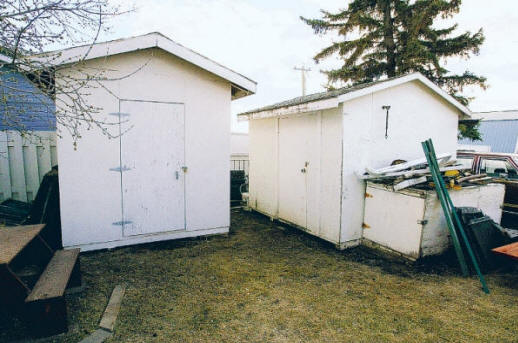 Photograph by: Bruce Edwards, The Journal, Edmonton Journal
On April 14, 2005, Katrina Effert gave birth on her own in her basement, then killed her baby and dumped his body over her neighbour's fence, leaving him hidden behind a shed. After the corpse was discovered four days later, she blamed many others for baby's death, including her ex-boyfriend Dan, but the RCMP kept coming back to the troubled and evasive young woman, pressuring her to at last tell the painful truth.
Effert's lawyer, Peter Royal, harshly criticized the Edmonton jury's verdict and said the case will promptly be appealed to a higher court, just as the first guilty verdict was. "On occasion, we have perverse verdicts, and this is one of them," Royal said in court last week. "This verdict is simply wrong."
Kirsten Kramar, a University of Winnipeg professor and an expert on infanticide, called the jury's decision a travesty of justice. "There is no doubt it will get overturned on appeal."
No one on either the Wetaskiwin or the Edmonton jury is allowed to talk about their deliberations. They are prohibited from defending their verdict. Yet as radical a departure as Effert's sentence was, the verdict itself is part of a trend that has seen many Canadians put the right to life of newborn children ahead of sympathy for infanticidal mothers.
The change in attitude has grown out of decades of social change that improved the lot of single mothers. In the past, many single mothers gave birth in shame and isolation to what were then called bastard children. Contraception, abortion, foster care and adoption agencies are all available. Emergency care is a 911 call away. As Supreme Court Chief Justice Beverley McLachlin noted in her 1991 report Crime and Women-- Feminine Equality and the Criminal Law: "Women faced with an unwanted pregnancy now have a number of less desperate alternatives available to them."
Such developments have led some people to no longer regard the killing of a newborn as the justifiable act of a desperate, possibly deranged woman, but as the ultimate form of child abuse. It's possible some members of the Wetaskiwin and Edmonton juries held this view.
They would not be alone in this conviction. While Effert's family and some of her friends stand by her in fierce fashion, some of her other old friends and acquaintances agree that she is guilty of murder. Their judgment of Effert dates to the summer of 2004, when 19-year-old Katrina Effert first told friends she was pregnant.
That summer had been an endless parade of wakeboarding, beer drinking, karaoke, cars and parties for Effert and her friends in Wetaskiwin. Everyone in Effert's gang was just out of high school, working low-wage jobs, charging into the world of adult pleasures and cares.
One day late in the summer, Effert sought out her friend Vanessa Dancey at a house party. Effert asked Vanessa if she wanted to go outside for a smoke. The two sat down on the curb, Dancey recalled.
"I have to talk to you," Effert said. "I found out I'm pregnant."
"What are you going to do?" "I don't know quite yet. I don't really want to have kids, but I do."
Dancey knew Effert as a tough chick, who would stand up with her mouth and, if necessary, her fists if anyone annoyed her. But Effert looked scared and sounded like she might be thinking of having an abortion. Dancey knew that Effert didn't have a regular boyfriend and made no mention of the baby's father. "Whatever you do, make sure you keep it," Dancey told her. "If you have to, give it up for adoption."
"OK," Effert replied.
Effert told a few others of her predicament, including Dancey's boyfriend, Kyle Heemeryck. She mentioned to him that a guy named Dan from Red Deer was the father. Heemeryck remembered the night earlier in the summer when Effert had met Dan at a bar, but Heemeryck hadn't seen the two together again. She and Dan seemingly had just had a short fling. This, too, was Dan's story. As he would later testify at Effert's first trial: "We were friends, I guess. Well, girlfriend-boyfriend, but I never saw her very often 'cause I was always working."
The two had sex once, but he used a condom, he testified. That was the last he saw Effert. Nine months later, in April 2005, the RCMP knocked on his apartment door to tell him Effert was linking him to the murder of a newborn child.
Devani Mah, one of Effert's closest friends, never heard any mention of Dan. Mah had known Effert since childhood. Her friend was always up for a good time, always bubbly and chatty. But now, one evening near the end of the summer of 2004, Mah noticed Effert was unusually quiet. They walked along a sidewalk together.
"What's your problem?" Mah asked.
"I don't know."
"What do you mean?" "I think I might be pregnant." "Oh?" "Yeah"
"That kind of sucks for you," Mah said in a joking but glib manner.
Effert laughed and looked away. It was the last that Mah heard about her being pregnant. Mah figured Effert didn't bring it up again because she realized she wasn't pregnant. But after
all that happened later, Mah wondered if she might have been more supportive that night.
"I think I could have been, 'What, you OK?' But I was young. I didn't care."
A short time later, in the early fall of 2004, Effert was out drinking at a local bar when she met up again with Vanessa Dancey and Kyle Heemeryck. Dancey was alarmed. "How come you are here drinking?" she asked.
"It was just a scare," Effert said, explaining that she took a home pregnancy test and it was negative.
Of course, the 18-year-old was pregnant, but had come up with something of a plan, at least if you go by what she would later tell psychiatrist Vijay Singh and psychologist Marc Nesca. Effert had dreamed of having a house, a husband and a baby, but her pregnancy didn't fit into the picture. Still, she wouldn't have an abortion. She felt that would be wrong and was scared of getting one. She decided she would keep the baby, but tell no one about it. When she felt the baby was about to be born, she would go to the hospital, give birth, then give up the baby. No one would have to find out. She wouldn't have to tell her parents.
She began to wear loose and baggy clothes. She successfully hid her pregnancy from almost everyone, but not, it would seem, from her mother, Marlene.
Effert still lived at home with her parents in a bungalow behind Wetaskiwin's main commercial street. Marlene ran a hair salon, while Katrina's father Kim worked as a labourer at a Home Hardware distribution centre. In December 2004--three months after Effert had told a few friends of her pregnancy-- Marlene heard a rumour that her daughter was pregnant. Marlene thought it was a case of mistaken identity because her son Ryan's fiancee, Crystal Anstey, was pregnant. Still, Marlene decided to confront her daughter. She had been pestering her for a year to go on birth control, but Katrina denied she was having sex. However, Katrina looked to Marlene as if she had put on a few pounds.
Maybe she was putting on weight because she wasn't exercising, Marlene thought. In high school, Katrina had been a jock, playing on the high school volleyball and basketball teams. But she was working at a pizza place, so maybe she was gaining extra pounds snacking on the job.
Katrina denied to her mother that she was pregnant. As she would later indicate to Singh, Katrina feared her mother would push her to get an abortion. At times, she overheard her parents arguing about the issue, with Marlene telling her husband she thought Katrina was pregnant.
Her father didn't believe it. Katrina and her father had always been close and would confide in each other. He taught her to drive and they often worked together fixing cars, including Katrina's minivan.
Marlene didn't let go of the issue. In February 2005, six months into Katrina's pregnancy, she again confronted her daughter to no avail.
That winter, Katrina continued to smoke and kept going out to bars with Devani Mah. They would usually have a few drinks at local bars like the Players Club, Centaurs, and Slicks, Mah said. Effert loved to get up and sing karaoke in her beautiful voice, crowd-pleasing renditions of Sarah McLachlan's Angel and I Will Remember You.
Effert maintained profiles of herself on various social networking sites. She used a picture of herself lying in a bikini and tanned as her main profile photo. "I have brown hair green eyes, i'm5'8" tanned athletic build, nose ring, tongue ring, tattoo, and I am very athletic," she wrote on one site, adding that her interests were writing music, singing, drawing, sports, wakeboarding, snowboarding, Ski-Dooing, quadding and racing cars.
One day at Boston Pizza, she was out having a smoke when a co-worker, Jamie Vergette, confronted her, and asked why she was smoking when she was pregnant.
As Vergette would later testify at Effert's second trial, Effert replied that her baby was dead but she still had to carry it to term.
On Thursday, April 14, 2005, Effert gave birth to the child in her basement. A few hours later, she killed the child. Effert called in sick to Boston Pizza, saying she had the flu. She dumped the baby over her fence into a sheltered spot behind a shed in her neighbour's yard. Her thong underwear was wrapped five times in a tight ligature around the baby's neck. There was no knot.
She carried on with her life, seemingly as usual. On Saturday April 16, she and her father spent the day working on a Toyota in the backyard. She went to her brother's house that night and played cards until 4 a. m. The next day, she went shopping with her mom at Canadian Tire. Later, she visited her sister-in-law and her aunt, then spent the evening watching a movie with her mom.
The baby was discovered April 18 at 8:40 a. m. by Effert's neighbour, Ed Zaft. His thoughts went to the girls next door, Katrina and her sister-in-law Crystal. He thought both had looked pregnant.
A team of 17 RCMP officers started work on the case, one that would see them interview 200 women as the baby's possible mother.
Just after noon on April 18, four days after the homicide, Const. Beth Phillip knocked on the Efferts' door, pulled out a tape recorder and interviewed Katrina.
Effert said she hadn't seen or heard anything suspicious.
"This question may seem a little personal, Katrina," Phillip said, "but were you at any time prior to today pregnant?"
"No, I haven't even had sex yet so," she said.
Phillip asked Effert if anyone around had been pregnant. Effert mentioned she had suspicions about a young neighbourhood girl. This was the first but not the last time she would cast suspicion on others.
After the RCMP left, Marlene confronted her daughter and asked if the baby was her child. Katrina denied it was, but was upset by her mother's doubts, as her sister-in-law Crystal Anstey would later testify: "She was really mad that her mom would ask her."
On April 25, 11 days after the homicide, Effert was asked to come into the RCMP office. She met with Cpl. Judy McDonald, a veteran officer. During their lengthy talk, Effert came across as chatty and co-operative, with nothing to hide. Effert told McDonald about past boyfriends, how she had had two high school boyfriends who cheated on her. She had also dated a guy named Dan from Red Deer, she said. She couldn't remember his last name, she told McDonald, but it had a crazy spelling, "Asgq" or something. They had met in June 2004 and had last hung out at her family reunion on Aug. 30, 2004.
Though she had had boyfriends, she was still a virgin, she told McDonald. "I'm 19 and I haven't."
She planned to have sex maybe once she was engaged and wanted kids. "I want it to be one person and one person only."
If she had a child, she said she would name him Rodney David Effert.
"So are you ready to become a mother?" McDonald asked.
"Oh God no. That's why I haven't had sex yet. That's why I don't want a boyfriend."
McDonald asked Effert if she had put on any weight. Effert said she had gained about five pounds during the Christmas holidays, but took off the weight by playing sports. She had played rugby on a women's team recently. "I was bruised from head to toe two months ago. It was unreal."
Knowing the baby had been found choked to death with thong underwear, McDonald asked Effert about her underwear. She wore only black or white plain underwear, she said, never anything like a thong. "What do I need them fancy? I don't have sex."
Effert said she had been hearing lots of rumours about the homicide, such as the baby coming from a young girl or someone on crack cocaine. She had seen a strange vehicle in her neighbourhood, and two people, a man and a woman out walking, she said, then gave detailed descriptions of the truck, the man and the woman to the RCMP. "Me and my parents think it's someone from out of town."
McDonald asked Effert what kind of person would murder a baby.
"Someone that needs help. Someone with problems. Like, you know, either a drug problem or alcohol problem or family problems or relationship problems....I don't know what the person was thinking....They just need to talk to someone to figure out why they did it, you know....If they were scared, you know, there's so many options out there, like, they could have dropped it off. They could have at least put it on our doorstep, rang the doorbell and took off. They could have taken it to the hospital to drop it off.... I feel for that baby, really, I do, because the baby has no chance, had no chance to fight back. It was a helpless soul, you know....Maybe they didn't know what they were doing...."
Effert allowed police to search her underwear drawer. She gave also them a DNA sample, but before she had to face an internal exam set up by the RCMP, she started to confess.
On the morning of April 27, 13 days after the killing, she approached her father, Kim, who was watching The Price is Right.
The baby might be hers, she said.
At once, he called the police. When two RCMP constables arrived, they found Katrina and her dad crying hysterically in the kitchen.
When police interviewed her, Effert now had a new story, one the first trial judge described as "zany." She had dated a man named Dan, who got her pregnant. When she went into labour, she called Dan in Red Deer. He drove to meet her and she gave birth in Dan's car in the parking lot of the Wetaskiwin McDonald's. She told the police Dan dropped her off at home and promised to take the baby to the hospital.
At once, the police arrested Effert. After she was checked by a doctor, McDonald again interviewed her and she gave more details, claiming that later in the morning, several hours after she had given birth and left the baby with Dan, he called her to say he had dropped the child at the hospital.
After the baby's body was found, however, both he and his friends called to threaten her if she ratted to the police. "He told me he got rid of it," Effert said. "He just told me that he didn't take the baby to the hospital and if I ever went to anyone and he found out that I'd be next, and then his friends call me all the time and tell me the same thing."
She had no doubts that he was the father. She had told him about her pregnancy over the phone back in October 2004, saying she planned to give up the baby for adoption.
McDonald pushed Effert on the issue of underwear that night, reminding the girl her DNA would be on her clothing, such as her thong underwear. "DNA doesn't lie....Is there
any reason that we'll find your DNA on these items?"
"Well, there shouldn't be," Effert replied.
Katrina could provide no motive to the police for Dan killing the child. McDonald told her that the police weren't buying her story, that it made more sense that something happened to the baby when it was with her, and that she herself had put the baby over the fence.
"No, I didn't put it there," Effert insisted. "I didn't even know until Monday about it."
At that point, Effert was shown a picture of the thong underwear and told that it caused the death.
The interview left Effert with a new fear, that the police might find her DNA on her thong underwear. How to explain that? The following morning, April 28, she was ready with yet another version of events. She now told McDonald that she gave birth at home alone. "I was scared and I didn't want my parents to know because my mom wanted me to get an abortion when she found out that I was pregnant."
At first, the baby was fine. "I held him and I was cuddling with him."
She cut the umbilical chord with scissors. She was going to go upstairs to tell her mom, but held the baby too tight and he stopped breathing. "And I got scared and I dropped him. And I was too scared to go to the hospital. Then I made it look like I murdered him. And the next day, I was gonna go to the hospital and I couldn't gather myself to do it. So I put him in my neighbour's yard until I could figure out what to do."
McDonald asked if Effert did anything to the baby before she took him outside?
"I put my underwear around his neck," she said.
"OK, and tell me why you did that?" "Because I wanted it to look like a murder
because I felt like I had murdered him," she said, adding that the baby wasn't breathing when she put the thong around the neck.
"And what was going through your mind then Katrina?" McDonald asked.
"That I killed my baby. That I could give him a chance to live because I should have went to the hospital that night."
"Who's the father of that child?" McDonald asked.
"I don't know."
More questions from McDonald revealed that Effert had narrowed it down to one of four guys. Effert knew the last name of only one of them, she said. She didn't know Dan's last name.
McDonald congratulated Effert for at last telling the truth, but there was still a problem with Effert's story, the fact that the thong had been wrapped so tightly around the child's neck. A short time later, the RCMP interviewed her one more time. This time the police brought in a homicide specialist, Const. Dan McCullum, of Calgary Major Crimes.
McCullum was more confrontational. "There is no doubt in my mind that you're responsible for killing that baby. OK?" he told Effert. "And you know and I know how that baby got killed, OK."
McCullum said he was concerned about one thing, that she had never expressed remorse. "Are you sorry for what happened?" "More than anything," Effert said. McCullum then asked Effert why she had never talked to someone about being pregnant.
She started to weep. "I was scared." "Were you? What were you scared of? "Disappointing my family and not being ready to be a mom. And my baby, not finding a decent home to be in."
McCullum told Effert he had been to Red Deer to talk to Dan, and then chastised Effert, saying he had gone to arrest the young man. "You sent us on a little bit of a goose chase there....Based on what you told us yesterday, he could have been arrested and charged for murder."
He told Effert that he believed the crime wasn't planned, that it was done in the spur of the moment, that she panicked because her parents might find out: "You had to kill Rodney, right?"
"Yeah. You were right, I was scared 'cause I was scared my mom was gonna wake up and my dad was gonna come home."
"He started to cry?"
"That's why I panicked...I dropped him." "OK, and then what happened?" "I tried covering his face." "With what?"
"A towel...And then I put him face down. And then I wrapped my underwear around his neck. 'Cause I wanted him to stop crying."
"OK, and how long did it take him to stop crying."
"I don't know, about two or three minutes, but I'm not too sure."
McCullum asked how she used the orange thong.
"I just twisted it and put it around, I'm not even sure how I did it."
"OK, and when did you put your thong on him?"
"Ah, probably 7 a. m. before my dad came home....I held him(Rodney)and then around 7:30 a. m. I put him on the side of my bed cause I couldn't look at him anyRead More ..quot;
She dropped him over the fence at around 11 a. m., she said. "I hugged him and I told him I loved him."
"Good for you."
"And I told him I was sorry. And then I tossed him over and I looked at him through the fence for about 20 minutes, and then I went into the house....I was feeling really bad and I was feeling like I did something that I know I did something wrong and I wanted to take it back."
On May 30, 2005, Effert was sent to Alberta Hospital for a psychiatric examination. She was put under the care of psychiatrist Dr. Vijay Singh and a team of nurses, social workers and psychologists. They came to like Effert, finding her a friendly, courteous, warm and sympathetic person. Effert took care of her own hygiene, had a healthy appetite and participated in activities. Singh didn't see her as being depressed or psychotic.
In his talks with Effert, she painted a bleak picture of her relations with her unnamed boyfriend.
When a home pregnancy test was positive, she said she spoke to her boyfriend, but painted him as a jerk: "He was the one who pressured me into this (having sex). He was the one who abused me. I feel quite hurt and betrayed. He always told me he loved me."
It's not clear if Singh ever verified her story about her boyfriend.
When it came to the homicide, Efert told yet another tale, this time that she placed a towel over the baby's mouth to stop him from crying, then fell asleep. She woke up in the morning and found the baby dead. "There was something around his neck, a pair of underwear, orange in colour, one of the worst feelings I have ever had. I was in shock and horror."
In his report on Effert, Singh concluded she wasn't suffering from a major mental disorder when she killed the baby. Still, he wrote, she had been in "affective denial" about her pregnancy, meaning she knew she was pregnant, but had none of the accompanying emotional and behavioural changes of pregnancy.
Singh found that Effert had many of the traits of the typical infanticidal mother:she was immature, emotionally isolated from the baby's father, unlikely to be able to support her baby financially, carried the baby in secret, received no prenatal care and gave birth alone.
When Effert gave birth, Singh concluded, she killed the baby because of her disturbed mind.
Effert was released from Alberta Hospital and went home to work and await her trial dates. In July 2005, her sister-in-law Crystal gave birth to a baby. Effert was photographed holding the child lovingly, the photo posted on the Internet. Effert joined a local Wetaskiwin church and started to sing in the choir. She worked at her mother's hair salon.
In the spring of 2006, her defence lawyer hired a psychologist, Dr. Marc Nesca, to determine Effert's state of mind when she killed her baby. In his report, Nesca wrote: "Her experience of childbirth included intense fear and pain. She felt helpless, experienced the process of giving birth as dreamlike, and is unable to recall portions of the birthing process. Subsequent to the birth of her baby, Ms. Effert felt dazed and oddly detached from her environment."
It was in this state, suffering from an "acute stress disorder," a major mental breakdown, that she had killed the child, Nesca said.
In the end, Nesca and Singh didn't agree on Effert's precise mental state at the time of the baby's birth, but did agree that she was disturbed when she killed Rodney. If their testimony was accepted by the jury, Effert would avoid a murder or manslaughter conviction, but would be convicted of the lesser charge of infanticide.
In both trials, the Crown prosecutors hammered away at Singh and Nesca on similar points, namely that both relied on Effert's version of events to base their decisions, so if she was lying to them, their decisions were essentially worthless.
The prosecutors also drew attention to the issue of Nesca and Singh's disagreeing about Effert's precise state of mind when she killed.
In the end, of course, the Wetaskiwin and Edmonton juries were not swayed by the psychiatric evidence.
Why?
During Effert's successful appeal of her first conviction, prosecutor Susan D. Hughson suggested: "It was (Effert's) web of lies and her attempts to manipulate others that led to her arrest and ultimate conviction.
"Her lies to her family, her lies to her friends, her lies to investigators and even her lies to experts assessing her mental state became the fundamental flaw with the offence of infanticide...which led to eventual downfall."
The expert evidence of Singh and Nesca was "fatally flawed," Hughson added. "(Effert's) own information to the experts was inconsistent, self-serving and entirely lacking in credibility....Even though they both provided the opinion that at the time of childbirth (Effert) might have been suffering from a disturbance of the mind, there was little else they agreed upon."
Back in Wetaskiwin, Effert's old friends have been left to struggle with the various conflicting stories and testimony about Effert.
"There's a lot of people who still talk about her and call her a criminal. But she's not. She made one mistake," Devani Mah said in an October 2007 interview.
At first, Mah was disgusted by her friend's action. But Mah wishes she had been there to help Effert.
"I hear people talking about her in town and I say, 'You guys, you don't even know what she went through.' They're just mean to her behind her back, call her murderer. They're just like, 'She's a stupid ass, a stupid bitch.' I'm like, 'Dude, shut up. Seriously.'"
People have paintballed the Efferts house and their vehicle has been egged at traffic lights. Marlene Effert had to twice call the police to the beauty salon to get rid of angry people, said a close family friend, Richard.
He defends Effert as a good person. "She's one of the best friends you can have. If you're in trouble, she'll bail you out.
"What happened with Katrina was not straight-out murder. She was not mentally there. She had just pushed the kid out by herself. She was scared. Her parents are good parents, but at the same time, when the kids did wrong, they were scary. They didn't beat them, but they made sure they knew they did wrong. And she was scared of that. ...Basically what happened is, she got scared and she panicked."
But another of Effert's old acquaintances, Kyle Heemeryck, felt the court decision was right. "I think she got the sentence she deserved."
The baby's alleged father, Dan, was perhaps least forgiving. In an October 2007 interview, he said he was disgusted by Effert's accusations of abuse against him. "That's not true, man. There's no proof of nothing."
Dan doesn't believe the child was his, but thinks Effert should pay for murder.
"I think she should go to jail forever. The kid didn't have a chance."
Copyright (c) The Edmonton Journal

