
Canadian Children's Rights Council - Conseil canadien des droits des enfants
www.CanadianCRC.com

Computer - Machine Translation -
FoxLingo Afrikaans Arabic Bulgarian Catalan Chinese Simplified Chinese Traditional Croatin Czech Danish Nederlands/Dutch Esperanto Filipino Finnish French German Greek Hebrew Hindi Hungarian Icelandic Indonesian Italian Japanese Korean Latvian Lithuanian Malay Norwegian Polish Portuguese Portuguese Brazilian Romanian Russian Serbian Slovak Slovenian Spanish Swedish Turkish Ukrainian Urdu Vietnamese Welsh

Canadian Children's Rights Council - Conseil canadien des droits des enfants

Child Rights - Virtual Library, Resource Centre, Archives and Advocacy
Parental Alienation

Parents who brainwash and poison their child's mind in family law disputes.

Family Law Reform

A child's right to be parented by both parents.
Equal Parenting

Child Identity Rights

Paternity Fraud
Adoption
Egg / Sperm Donors
Human Identity

Corporal Punishment

Repeal section 43 of the Criminal Code of Canada which allows assaulting children.

Silenced Citizens

The report of the Senate Committee on child rights implementation.

Female Sex Offenders

Our most visited webpage. Female sexual predator awareness.

Skip Navigation Links
Boys with computer

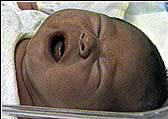
"..Circumcision May cause Urinary Tract Infection"

Urinary Tract Infections (UTIs) are rare, and mainly occur in the first year of life. They are several times more common in girls than boys (but of course surgery is never considered for girls).

They are painful, and women's experience of them is a powerful inducement to have sons circumcised, if they imagine that this will protect them. In fact, a significant proportion of boys contract UTIs even though they are circumcised. A study in Israel found they mainly occurred in girls at four months, but in boys soon after they were circumcised....  Now an Australian study suggests circumcision may cause urinary problems.  More..

WOMEN:
THE FORGOTTEN CHILD MURDERERS

Women who kill their children are given sympathy and sentenced to "treatment" while men who do the same thing are charged with murder and sentenced to life.

Perhaps it is not a coincidence that women are many times more likely to murder their offspring than men.  More ..

Our Most Popular Web Page

Female Sex Offenders
Female Sexual Predators

Hundreds of them.... female teachers who sexually assaulted 12 year old boys. Read about a lesbian tennis coach who sexually assaulted her 13 year old female student.

Read how a 40 year old female sexual predator blamed a 7 year old boy whom she claimed was " coming on to me" and whom she "hoped to marry someday."  More..

Virtual Library of Newspaper Articles

The London Times

Circumcision "the unkindest cut of all"

The London Times, UK, by David Baker, March 24, 2008

Barbaric, mutilation, child abuse, freaks, nutters, obsessives. The language on both sides of the debate about infant male circumcision is not always temperate. Put together new-born boys, their penises, knives and two of the world's oldest religions and passions are likely to run high.

While last month saw the fifth International Day of Zero Tolerance to Female Genital Mutilation, marking a fairly united global campaign against the practice in females, the arguments about the removal of a male infant's foreskin seem mired in misinformation, accusations and despair.

What is clear is that there are very few medical indications nowadays for choosing circumcision over other procedures.

Writing in the BMJ (British Medical Journal) last December[], Padraig Malone and Henrik Steinbrecher, of Southampton University Hospital, found only two absolute indications for circumcision: a chronic skin condition called balanitis xerotica obliterans, which may have links with penile cancer, and some specific abnormalities and scarring on the foreskin. Beyond that, they say, problems such as phimosis, when the foreskin is too tight to be pulled back over the glans, and inflammation of the glans and foreskin caused by bacterial infections - both of which often see the surgeon reaching for their scalpel - can usually be treated non surgically.

Yet infant male circumcision continues on a wide scale. According to Malone and Steinbrecher, one male in six worldwide will be circumcised at some point in his life. In the UK, rates have dropped significantly since the 1930s and 1940s, when it was almost de rigueur for boys of a certain class to be circumcised. But today the NHS still performs about 10,000 circumcisions a year on boys aged up to 15. Add to that hard-to-count religious circumcisions carried out at home and, say campaigners against it, you end up with a lot of unnecessary trauma and risk.

“Many men are damaged by it,” says David Smith, general manager of Norm-UK, which campaigns against male circumcision, “both physically and psychologically. The physical harm includes problems with sensitivity - either they have no sensitivity or too much ‘bad' sensitivity. The psychological damage is that men who are circumcised feel very different and can even suffer from post-traumatic stress disorder.”

However, circumcision does appear to offer some important health benefits, particularly with sexually transmitted infections. Research published last year from Kenya showed that circumcision had a significant protective effect against HIV infection - at least in countries where HIV is extensive and spread predominantly through heterosexual intercourse. Penile cancer also appears to be less common among circumcised men. And a 1999 review of past research, published in the British Journal of Urology, indicated that uncircumcised males were more prone to diseases such as syphilis and herpes simplex. Which is enough to persuade some doctors that circumcision is the right course.

“When my boys were born,” says Dr Kirsten Patrick, a former hospital doctor and now an associate editor at the BMJ, “I did an enormous search of the literature and I thought [circumcision] was a good thing. It is much easier to do when they are small and less traumatic than waiting till later. I knew as a doctor that there was a way that they could go through this pain-free.”

Patrick has no truck with circumcision away from the medical establishment. “Holding a baby down, with no anaesthetic, that's dreadful,” she says. “There's no way anyone should do that. But I am in favour of saying that there is benefit to circumcision and it should be regulated.”

One part of the country that is moving quickly in this direction is Walsall, where the local hospital now offers a weekend male-circumcision clinic. “We have a large Muslim community here,” says Dr Sam Ramaiah, director of public health for Walsall Primary Care Trust, “and we wanted to provide local children with a service that is safe and secure. The procedure takes place in hospital with local anaesthetic and is done by a trained surgeon. The advantage is that there is care available in case of complications and, if necessary, the child can stay in.”

Programmes such as this are unlikely to satisfy anti-circumcision campaigners - who say that the physical effects of circumcision on an infant are only part of the story. Norm-UK's argument is that, for many men, circumcision reduces sexual pleasure and that the trauma of childhood circumcision can last a lifetime. “Circumcision is not like having your tonsils out,” says Smith. “You are physically different from a normal man and you start to shy away from using changing rooms or undressing in public. It affects men []in relationships. They feel inferior.”

As evidence, he e-mails me the transcript of a lecture he gave last year[], entitled “Circumcision: The Hidden Damage”, which includes a range of quotes from men blaming parents and doctors for the “mutilation” that they were subjected to as children. Yet his sample is inevitably self-selective, being made up of men who had already contacted Norm-UK for help.

“The psychological side of this debate is not easy to pin down,” says Andrew Samuels, professor of analytical psychology at the University of Essex and a psychotherapist. “If it were possible to generalise accurately about the impact of infant circumcision you should be able to research it and find evidence of trauma in the circumcised population. But the research has not been done. So we are in a kind of not-knowing state.” But, he says, “it may well be a bigger act, more problematic, more potentially upsetting, not to circumcise in a culture that circumcises. I don't think many Jews, for example, would deny the physical pain [of circumcision] but they might say that not to do it could lead to a psychologically distressing situation in which an uncircumcised boy might be denied a place in the group.”

Jonathan Romain is Rabbi of Maidenhead Synagogue and chairman of the Assembly of Rabbis, which oversees Reform Judaism in the UK. (No one from the more orthodox branches of Judaism or Islam responded to requests to be interviewed for this piece.) “Even the most lapsed Jew will circumcise his or her son, but there have been changes in the past 20 years,” he says. “In the wider society, circumcision is going out of favour. In the Jewish community there has been an increase in intermarriage and sometimes the non-Jewish partner has objections.” Romain, however, has no doubts about the safety of the procedure.

“If there was any hint that there was a physical or psychological problem it would have been suspended centuries ago, something that has happened to other practices in Judaism. And indeed things have changed already. Nowadays we will use only mohelim [people who perform ritual Jewish circumcision] who are doctors. We always use anaesthetic cream. If there is anything that indicates that we should delay the circumcision we will delay it,” he says.

Samuels, who is Jewish, feels it is time for a discussion within Judaism about how central circumcision is to Jewish identity. But he acknowledges that to get a frank discussion will need people to stick their necks out.

“Things will change,” he says, “but over a fairly long time scale. In 25 years there may be plenty of uncircumcised Jews who will identify as Jews and be accepted as Jews and that won't depend on their being circumcised or not.”

Others are not so sure. Ritual circumcision stretches back before the origins of Judaism and Islam and is so entrenched in those religions that it will take a lot to shift it.

“It can come as a surprise to many how custom and tradition are still powerful forces in liberal, secular societies,” says Justin Woodman, a lecturer in anthropology at Birkbeck College, University of London, who specialises in the anthropology of religion. “Circumcision is part of the politics of identity in a diverse and multicultural world. The act of cutting literally makes a line of division.”

Reversing the operation

John Turner (not his real name), a 60-year-old training manager from Birmingham, felt so affected by the fact that he had been circumcised as a boy that he is now taking steps to reverse the procedure. “I discovered I was circumcised when I was 4 and from that moment on it felt wrong,” he says. “As an adult I experienced a lack of sensitivity in my penis during sex. Then one day I saw an article on foreskin restoration in my son's Maxim magazine and I thought, ‘Whoa!'”

Restoration of the foreskin takes many forms, but one of the most popular - the one that Turner is now using - involves stretching the skin of the shaft of the penis up over the glans and securing it there to encourage new growth.

The idea, according to Norm-UK's Peter Ball, a former GP who himself has undergone foreskin restoration, is that skin under tension produces new skin. “It's a long process,” he says, “perhaps two to three years, and it requires dedication, but it results in a new foreskin, the glans becomes shiny, thinner and much more sensitive and sex is much more pleasurable.”

For Turner, there is still some way to go but, he says, “you have benefits as soon as you have some coverage. I don't blame my parents or anything and I don't think I have had psychological problems over it. I just lost of lot of sensitivity and now the glans is becoming sensitive again and intercourse is a lot better.”

U.N. Convention on the Rights of the Child (UNCRC) U.N. Convention on the Rights of the Child (UNCRC) (1989) U.N. Declaration of the Rights of the Child (1959) U.N. CRC 1st Optional Protocol - Children Armed Conflict
Canada's Reports
U.N. CRC 2nd Optional Protocol - Sale of Children, Child Prostitution & Child Pornography
Canada's Reports
Canada's 3rd Report to the U.N. Committee on the Rights of the Child - Due 2009 Canada's Report Involvement Children Armed Conflicts to the U.N. Committee on the Rights of the Child - May 2006 - 42nd Session Canada's 2nd Report to the U.N. Committee on the Rights of the Child 2003 - 34th session Canada's 1st Report to the U.N. Committee on the Rights of the Child 1995 - 9th Session Government of Canada's
Plan of Action - 2004
U.N. Convention on the Rights of the Child - Application in Canadian Courts U.N. Study-Violence Against Children Canada's National Child Day - Gov't Obligations to Educate the Public Fetal Rights and the UNCRC Scholarly Submission
Senate Committee - Child Rights Implementation Senate Hearings on the Implementation of Child Rights in Canada Interim and Final Reports of the Senate on Child Rights Senate Hearings on the Implementation of Child Rights in Canada Senate Hearings on the Implementation of Child Rights in Canada Senate Hearings on the Implementation of Child Rights in Canada
Young Drivers - Ontario plans to stop them driving Ontario's Proposed Bill - Young Drivers Young Drivers Need to be Heard What you can do to to get meaningful changes News Coverage of Ontario's Young Driver's Bill Manitoba's Young Driver's Law Manitoba's Young driver's law but not Public Insurance British Columbia - Young Drivers Law Groups Opposing Changes / Young Drivers Law
Women & Men Reproductive Choice About Pro-Choice
Parental Alienation Syndrome Parental Alienation Overview Newspaper Articles about Parental Alienation Parental Alienation - Canadian Court Rulings Parental Alienation Court Rulings - US and other countries Parental Alienation Studies and Research Parental Alienation Awareness Day - April 25 Books About Parental Alienation Parental Alienation - Documenting The Evidence Parental Alienation - Using a Parenting Coordinator About Parental Alienation Parental Alienation - What Canadian Health Professionals Are Doing About It. Parental Alienation Dos and Don'ts Certain Feminist Organizations Deny Parental Alienation Exists
Infanticide / murdering children Murder / Homicide of Children / Youths - Statistics Canada Mothers who kill their children Infanticide - Criminal Code of Canada Offence UN and Canadian Children's Rights Council position
Newborn Baby Abandonment Laws Child Abandonment Laws
Scholarly Submissions University &College About Submissions Read Submissions
Child Identity Rights and Paternity Fraud Child Identity Rights In Canada Child Identity Rights - Frequently Asked questions (FAQs) Baby Naming Case - Supreme Court of Canada Paternity Fraud CBC Sunday - TV Show on Paternity Fraud in Canada Infidelity NON-Invasive Prenatal DNA Paternity Testing Paternity testing Paternity Blood Type Chart - disprove paternity Two Opposing Judgements on Paterntiy Fraud from Ontario Courts Mandatory paternity testing - Position Statement by the Canadian Children's Rights Council Liam Magill - High Court of Australia Paternity Fraud case Paternity Fraud- Criminal Code of Canada Finding your birth parents
Children & Sex - Age of Consent Age of Consent for Sex in Canada Children having children - Teen Pregnancies
Child / Youth  Criminal Justice System Youth Criminal Justice Act (YCJA) (2003) Read the Act YCJA - History of the Bill, Briefs, testimony, Parilamentary Transcripts YCJA - Background Information- Canada' s Department of Justice Youth Criminal Justice Youth Crime in Canada Youth Jails in Canada Supreme Court of Canada - Youths Charged as Adults - May 16, 2008
Canadian Children Living in Poverty Child Poverty In Canada Homeless Children in Canada Aboriginal Child Poverty
Adoption and Human Identity Adoption News Birth fathers ignored Adoption Laws Finding your birth parents New Brunswick' s Adoption Success
Corporal Punishment Hitting and Spanking Assaulting children to discipline them - Corporal Parenting Experts about Corporal Punishment Most Developed Countries Don't Allow Corporal Punishment of Children International SpankOut Day April 30th Canada-Wide Campaign to End Corporal Punishment fof Children
Genital Mutilation of Male and Female Children Genital Mutilation/ Circumcision Position Statements - Medical Associations on Male Circumcision Research Foreskin Important Component Sensory Mechanism Penis
Child Abuse and Child Protective Services Child Abuse / Neglect Overview Canada Statistics Parent Abuse committed by Youths Child Hate Crimes Shaken Baby Syndrome The Invisible Boy: Revisioning the Victimization of Male Children and Teens 1996 - Health Canada Female Sex Offenders / Female Sexual Predator Awareness Karla Homolka - Child Killer and Sexual Predator Parental Alienation Butterbox Babies Canada' s Aboriginal Residency School
Bullying In Schools in Canada Bullying - Info for Parents Bullying Bullying Study Shows Canada has Too Much Bullying Bullying in Ontario Schools / The Safe School Act 2009
International Child abduction - Hague Conv.Hague Convention - Order or Chaos 400 Canadian Children Abducted Yearly Canadian Parliament Report on International Child Abduction Royal Canadian Mounted Police Statistics on Child Abductions Hague Convention Child Abduction Central Authorities in Canada Canadian Justice System Fails Children Abducted to Canada MP Larry Miller Lobbied Judge Hearing Child Abduction Case
Family Law - federal and provincial / terr. Canadian Family Law History Special Joint Committee on Custody and Access 1998 Fatherless Canada Child Relationship Support Child Financial Support Collaboratice Law and and Social Workers Family Responsibility Office - Ontario Client Services & Legal Telephone Directory Children' s Rights in Family Law
Education About Child Rights Educators Teaching democracy
UN - Rights of Persons with Disabilities - 2006 About the UN Convention for the Rights of Disabled Persons Read the UN Convention for the Rights of Disabled Persons
Special Days of the Year - Mark your Calendar April 25 - Parental Alienation Awareness Day April 30th - International SpankOut Day June 21st - Canada' s National Aboriginal Day August 12th UN International Youth Day November 20th - Canada' s National "Child Day" - Gov' t Obligations to Educate the Public December 3rd - International Day of Disabled Persons December 10th - Anniversary of the Universal Declaration of Human Rights
Child Care and Early Childhood Education Early childhood education and care Corporate Early Childhood Education and Care Newspapers Articles, Papers and Studies on Early Childhood
Universal Education of School Age Children Ontario, Canada discriminates by publicly funding certain religious schools Grade school University / College
Universal Child Health Care Services Child Health Care
Misc. Topics Relating to Child Rights Youth Suicide Anorexia Nervosa ADHD-Ritalin Smoking - Lung Cancer and teens
-