Toronto Star, TRACY HUFFMAN, CRIME REPORTER, Oct. 14, 2004
Fewer youths are being sent to jail for their crimes.
The incarceration rate for youths in Canada reached an eight-year low in 2002/2003, according to a
Statistics Canada report released yesterday. About 90 per cent of young offenders were on supervised
probation, 7 per cent were serving time in jail and 3 per cent were in custody awaiting a court appearance
or sentencing.
The Youth Criminal Justice Act, which replaced the former Young Offenders Act in April 2003, reserves jail
for young people who have committed serious and often violent crimes.
Even though the study covered a period before the implementation of the Youth Criminal Justice Act, judges
were likely anticipating the changes and beginning to apply them in youth courts, said Anthony Doob, a
criminologist and professor at the University of Toronto.
"It is possible that all the talk about being more elective in the use of custody had an effect on judges.
Also I think a good part of it had to do with the general reduction of the number of cases going into youth
court," said Doob, who recently co-wrote a book called Responding to Youth Crime in Canada.
In the past, judges often looked for alternatives to jail for youths but are now required to do so, Doob
said.
On any given day during 2002/2003, an average of 29,400 youths were in custody or on supervised probation.
The total number of youths aged 12 to 17 in the correctional system decreased by 6 per cent from 1993/1994
to 2002/2003. Youths held on remand (awaiting a court appearance or sentencing) increased by 21 per cent
over the same period, while those sentenced to custody decreased by 35 per cent.
Many celebrities would shrink from view after a PR nightmare like Alec
Baldwin's leaked voice mail in which he calls his 11-year-old daughter,
Ireland, a "rude, thoughtless little pig." But Baldwin wants to
use the media scrutiny to give exposure to parental alienation, the controversial "syndrome"
caused by one parent's systematically damaging a child's relationship
with the other parent.
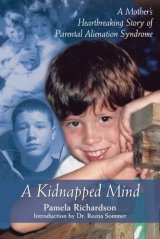
A Mother's Heartbreaking Story of Parental Alienation
What does Parental Alienation Syndrome mean? In my case, it meant losing
a child. When Dash was 4 1/2 years old his father and I broke up. I dealt with
the death of our marriage and moved on but Peter stayed angry, eventually turning
it toward his own house, teaching our son, day by day, bit by bit, to reject
me. Parental Alienation Syndrome typically means one parent's pathological hatred,
the other's passivity and a child used as a weapon of war. When Dash's wonderful
raw materials were taken and shaken and melted down, he was recast as a foot
soldier in a war against me.
The 10-year-old Katy boy accused of murdering his father this summer
is now the face of an unofficial psychiatric disorder that may have lead
to his father's death.
Some psychiatrists call it Parental Alienation Syndrome and they say
that's why the son killed Doctor Rick Lohstroh last summer. The syndrome
is basically caused by a bitter parent who poisons a child against the other
parent, usually in cases of divorce.
Study says such cases should be moved out of court system, handled by
individual judges
The Globe and Mail
May 13, 2009
An escalation in parental alienation allegations is draining valuable
courtroom resources, a major study of 145 alienation cases between
1989-2008 concludes.
"Access problems and alienation cases - especially those which are
more severe - take up a disproportionate amount of judicial time and
energy," said the study, conducted by Queen's University law professor
Nicholas Bala, a respected family law expert.
"One can ask whether the courts should even be trying to
deal with these very challenging cases."
Read More ..
Courts criticized for recognizing 'parental alienation'
National Post
March 27, 2009
Toronto -- The scope of the courts' reach into family affairs has
long been contentious, but a recent trend in Canada's legal system has
brought a new controversy that has some onlookers praising judges and
others condemning them for accepting what they call "voodoo science."
More than ever before, Canada's judges are recognizing that some
children of divorced and warring parents are not simply living an
unfortunate predicament, but rather are victims of child abuse and
suffering from Parental Alienation Syndrome.
Read More ..
Parental Alienation
B.C. judge bars mother from seeing daughter
Court orders one-year ban after 'unfounded' abuse allegations
made about teenager's father
THE CANADIAN PRESS March 10, 2009
VANCOUVER - In a case of extreme parental alienation, a mother has been
banned by a B.C. Supreme Court judge from seeing her teenage daughter for
more than a year.
Because of the urgency of the matter, Justice Donna Martinson issued
the terse, two-page ruling outlining 15 conditions the parents must follow,
including that the mother, known only as Ms. A, not see her daughter until
at least March 31, 2010.
The decision came after the mother alleged extreme emotional abuse by
the father, which she claimed was putting the teenager's safety at risk.
"I am satisfied that Ms. A's allegations are unfounded,"
Martinson wrote.
"I am further satisfied that she has continued to undermine the
relationship between M and her father and has acted in ways that are detrimental
to M's psychological healing."
Names have been stripped from the court ruling to protect the girl's
identity.
The judge has ordered that both the mother and maternal grandmother have
no contact with the girl, which would be enforced by police if necessary.