Canada's most visited website supporting Canadian children's rights.
The Canadian Children's Rights Council, is a non-profit, non-governmental educational and advocacy organization concerned with Canadian children's human rights and responsibilities.
Since 2003 over 50,000,000 unique Internet visitors have visited this site to learn about child rights in Canada. Every month we get visitors from over 160 countries.
The most visitors in a single day was 397,479 visitors on May 4, 2016.
Many thanks to all the volunteers from Goulds, NF to Comox, BC who made our website a success.
Happy National Child Day, Canada! November 20th

How a child's refusal to wear a seatbelt grounded a Porter flight and sparked an online tantrum
Passengers say they were stranded in the middle of the night after their flight from Victoria, B.C. to Toronto was cancelled.
The Toronto Star, August 15, 2026, By Kristjan Lauten, Staff Reporter
At first, nobody on the plane really believed that one child’s refusal to wear a seatbelt could really cancel an entire flight.
They sat tightly packed on a 10:30 p.m. Thursday night red-eye Porter flight from Victoria, B.C. to Toronto's Pearson airport and watched the clock creep later and later with no movement on the tarmac. It seemed, at least to passenger Rachel Berry, like any other delayed flight.
Then the announcements started. Vague reminders to obey the crew's instructions got increasingly stern until one finally warned that directions needed to be followed within a minute.
Flight attendants told passengers the delay was a young child, around row 20, refusing to buckle in before takeoff. Berry remembers those whispers spreading aisle to aisle as it approached midnight and confusion grew.
The young child and the mother were ultimately forced to deboard the plane. But their exit from flight PD444 on Aug. 6 wasn't enough - the commotion forced the pilots to miss their runway window to take off before the airport closed, which cancelled the late-night journey.
"It is pretty sensational for the entire flight to spend an extra night because of one child," Berry said.
Within days, the child's alleged behaviour and airline response would be at the centre of a fiery discourse worldwide about parenting and passenger rights. Comment sections across social media are still firing with arguments over how the parent should have treated their child.

Brantford police charge woman, 39, in connection with 2005 death of newborn 'Baby Parker'
The Expositor, Brantford, Ontario, by Michelle Ruby, Vincent Ball, Feb 26, 2026

Brantford Police have arrested a woman in connection with the case of Baby Parker, a full-term newborn baby that was found dead near the walking trails by Dufferin Avenue and Parkside Drive in Brantford.
Police have arrested and charged a 39-year-old woman in connection with the death of a newborn, who became known as Baby Parker, more than 20 years ago.
The accused, who lived in Brantford at the time of the incident, has been charged with indignity to a body and concealing the body of a child.
It has been more than two decades since a full-term newborn boy was found wrapped in a towel near an abandoned train track in Brantford. On July 28, 2005, Brantford police responded to the area of the walking trails near Dufferin Avenue and Parkside Drive after a citizen discovered the newborn's body.
The death of the infant became the subject of an extensive and ongoing police investigation, said a news release issued by police on Thursday. As the identity of the child was unknown, officers named him Baby Parker, a reference to the area where he was found. Until now, neither the child's mother or father had been identified.
"With the assistance of the Toronto Police Service, and through the utilization of new DNA technologies and advanced investigative techniques, detectives were able to further the investigation and identify the person believed to be the mother of Baby Parker," said the release.

Mass circumcision ceremony leaves 39 boys dead and dozens more mutilated after botched procedures during tribal 'initiation' in South Africa.
The Daily Mail, By JAMIE PYATT IN CAPE TOWN, 31 July 2025
The 2025 tribal 'initiation ceremony' where teenage males in South Africa undergo agonising circumcision has ended - with 39 deaths and dozens more boys mutilated.
Despite a target being set by the Government of zero fatalities this year, the figure is still a huge drop on last year where 93 died, while a total of 361 boys have died in the last five years.
Gruesome complications in 2024 led to 11 penis amputations after unskilled traditional 'surgeons' used old spears and razor blades to perform the eye-watering rituals.
Thousands more have ended up in hospital since 2020 after the twice-yearly three-month seasons of initiation which ends with the circumcision.
The ceremony, known as Ulwaluko, is typically carried out by Xhosa people and marks the transition from boyhood to manhood.
Boys generally undergo the centuries old ritual aged between 16 and 26.
Without undergoing the ceremony they are not allowed to sit in on tribal meetings, take part in some social activities or get married.
The rituals have been held for centuries in secret in specially built huts away from the villages where nobody except the tribal elders and the young initiates can enter.
The Agenda TVO - Is Ontario's Child Welfare System Working?

She sought asylum in Toronto as an unaccompanied minor. A new facility will help others like her get emergency housing and other help
Anchor House - at an undisclosed location - is believed to be the first emergency housing in Canada dedicated to unaccompanied refugee youth.
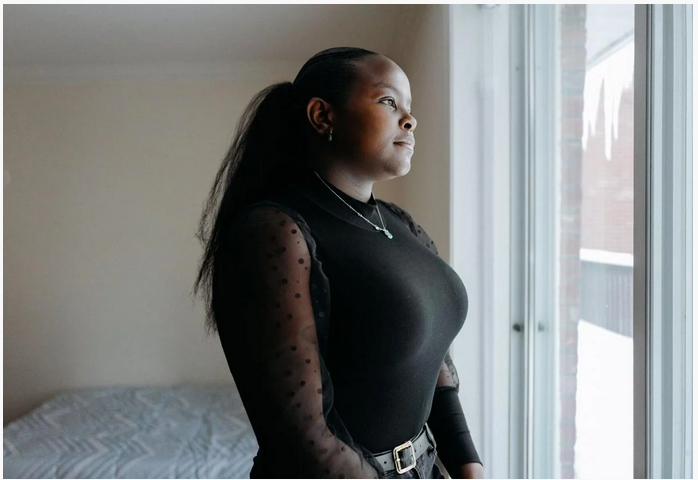
Tracy Muriithi, 23, who is a former unaccompanied minor refugee from Kenya, is pictured in one of the girls' rooms inside the Anchor House. The first youth moved in Monday. The Centre for Refugee Children opened it to provide emergency shelter for newly arrived unaccompanied minors.
Toronto Star, By Nicholas Keung, Senior Immigration Reporter, Feb. 25, 2025
Tracy Muriithi had never been away from her family, let alone travelling outside Kenya on her own.
When she landed in Toronto in January 2019 after a 20-hour flight via Germany, the then 17-year-old followed the signs to Customs and had no idea what she was supposed to do. She didn't even have a winter coat. Although she came here on a student visa, there was a darker reason for her travel, and the border guards questioned her. "They were like, 'Why are you coming from home? Are you really coming here to study?'" recalled Muriithi, now 23.
"I was very scared. I'm going to this new country where I don't know anything or anyone. The only thing I was banking on was that I could speak a bit of English. And I know my parents are not there to help me because we're time zones and time zones away."
The truth was, said Muriithi, her parents sent her to Canada to save her from gender violence back home. And the unaccompanied minor had to navigate a new life and a complex refugee system by herself.
According to the Centre for Refugee Children in Toronto, each year 400 to 500 unaccompanied and separated children come to Canada for asylum, about half of them destined for Ontario. They flee conflict zones and persecution based on race and ethnicity, as well as family violence. Their parents often don't have the resources to get the whole family out, and make a bid to keep their children safe.
'Neveah was failed': Rare access reveals haunting details about the life and death of the girl found in a Rosedale dumpster
As part of an ongoing investigation of Neveah - the four-year-old whose remains were found wrapped in blankets in a dumpster in 2022 - the Star recently won access to nearly 1,500 pages of court records.
The Toronto Star, Toronto ON, February 15, 2025
By Wendy Gillis Crime Reporter, and Jennifer Pagliaro Crime Reporter
A rap at the door summoned the woman to the front entrance of a rooming house in east Toronto.
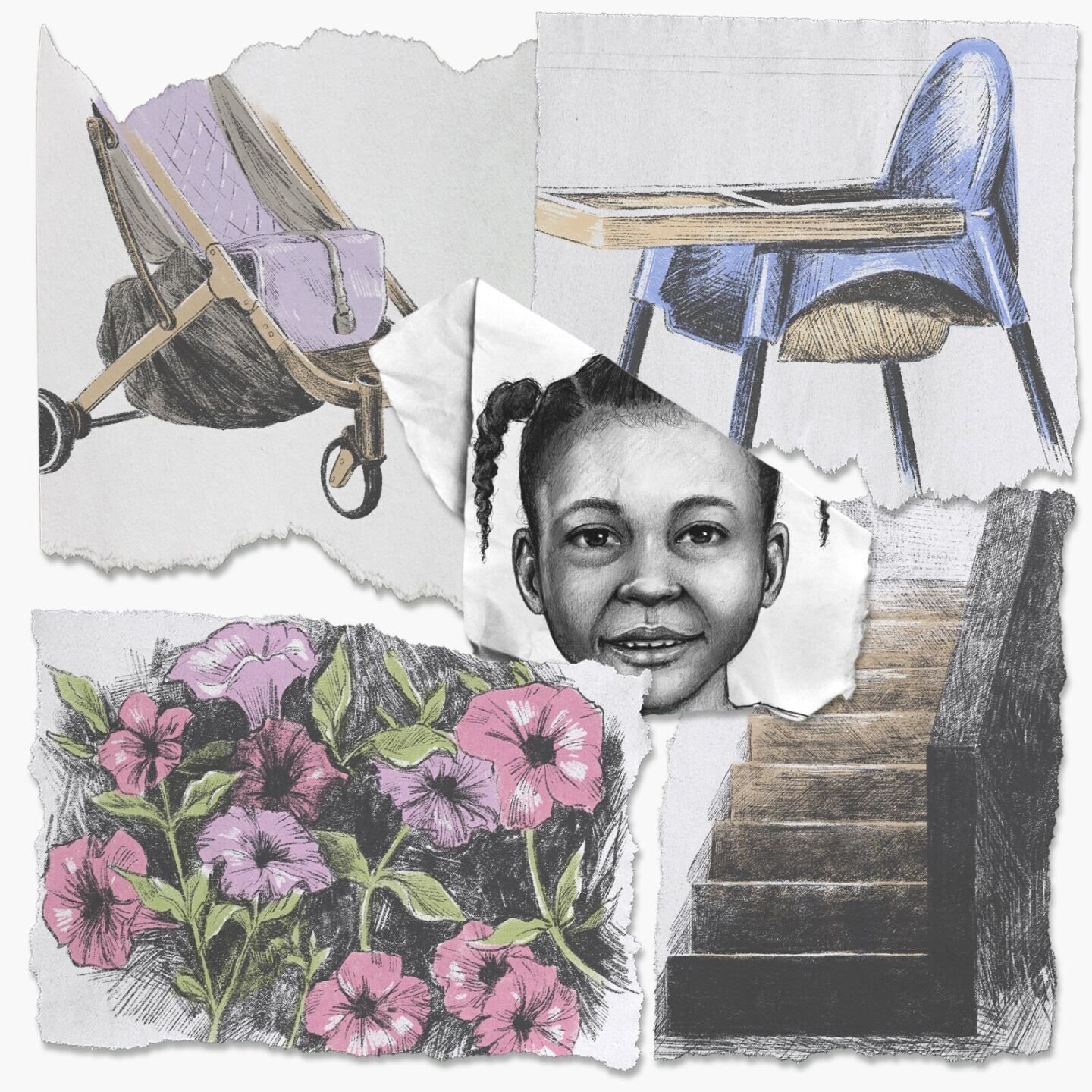
Outside the rundown two-storey home, an empty stroller sat parked by the driveway.
A young boy soon toddled up to the door, followed by two curious school-age girls.
Standing at the stoop, in the heat of a late June afternoon, was a trio of plain clothes officers from the Toronto police homicide squad.
The woman had one question for the detectives at her door.
'How did you find me?'
Only hours before, police had solved one of the most wrenching mysteries in recent Toronto history. More than a year after the decomposed remains of a small girl were found wrapped in blankets in a Rosedale dumpster, investigators had, at last, determined who she was. An anonymous tip, advanced DNA technology and pings off a cellphone tower had brought detectives to this doorstep in June 2023, face-to-face with the girl's mother.
The children were ushered upstairs. Police needed to deliver the grim news and begin the next phase of their criminal investigation, one focused on a wholly new question about the child they now knew as Neveah.
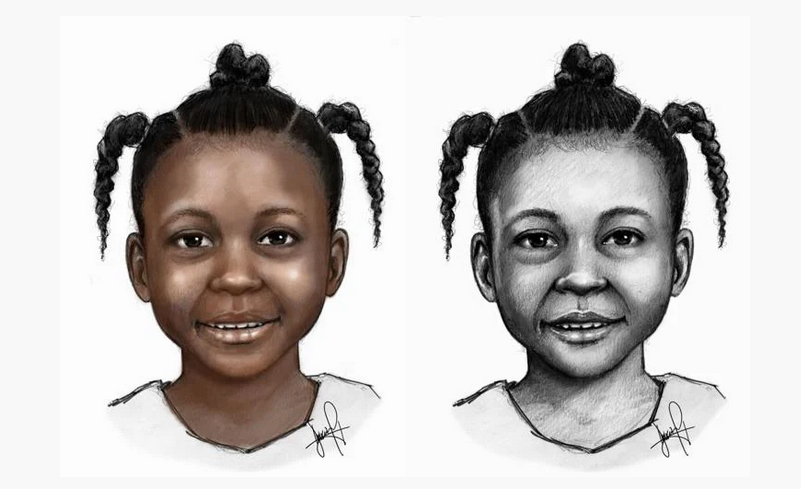
A composite sketch of Neveah whose body was found in a Rosedale dumpster on May 2, 2022.
Men's Experience of Domestic Violence, by Dr Liz Bates, Dept of Psychology, University of Cumbria. UK
Hidden Victims: Men and their Experience of Domestic Violence.
Dr Liz Bates, Senior Lecturer in Applied Psychology at the University of Cumbria, UK, June, 2019
The aim of this talk is to discuss men's experience including reference to several recent studies that reveal men's experiences of physical and sexual violence, and controlling behaviour.
Find out more in the new book 'Intimate Partner Violence' by Dr Liz Bates & Dr Julie Taylor (Routledge, 2019).

Canadian DNA lab knew its paternity tests identified the wrong dads, but it kept selling them
CBC, April 9, 2024, by Jorge Barrera
Canadian DNA laboratory knowingly delivered prenatal paternity test results that routinely identified the wrong biological fathers - ruling out the real dads - and left a trail of shattered lives around the globe, a CBC News investigation has found.
Harvey Tenenbaum, the owner of Viaguard Accu-Metrics, told a CBC producer with a hidden camera during a conversation in his office that prenatal paternity test results that his laboratory produced for about a decade were "never that accurate."
The hidden camera conversation unfolded in the midst of a months-long CBC News investigation into a years-long pattern of erroneous results produced by Viaguard's non-invasive prenatal paternity testing. The test - if done correctly - matches DNA from a fetus that is in a mother's blood with the biological father's DNA.
Viaguard, based in Toronto, sold its prenatal tests through various related online storefronts with names like Prenatal Paternities Inc. and Paternity Depot.
"The test was not that accurate... And we're leery of that test now," said Tenenbaum.
Tenenbaum is 91 and still runs the laboratory, showing up onsite most days, answering phones and meeting with customers.
A longtime businessman, it seems he began selling DNA services through Viaguard in the early 2000s, registering a prenatal paternity division in 2013, according to business records.
During the hidden camera encounter, he presented himself as a seasoned scientific expert who's seen it all, and, in a matter-of-fact tone, said he knows mistaken prenatal paternity results could inflict lasting damage on lives.
"There's a lot involved if it gets screwed up," Tenenbaum told the CBC News producer, who posed as a prospective customer seeking a paternity test.
"What if it's the wrong guy named and you're aborting your child of, you know, a wrong person ... We can imagine everything happens in life... You see them all, and worse, and worse."
He also described instances where Viaguard's tests were proven wrong during a birth.

44 students suspended for incomplete immunization records
The Canadian Press, April 9, 2024
As many as 44 elementary students have been suspended from school due to ongoing incomplete immunization records with the Windsor-Essex County Health Unit (WECHU), as mandated by the Immunization of School Pupils Act (ISPA) R.S.O.1990.
As of March 26, 2024, while most elementary school students have fulfilled all required vaccinations, the suspensions of 44 students highlight the importance of adhering to immunization requirements.
Beyond compliance, maintaining up-to-date immunization records aids the WECHU in planning services and identifying potential risks in the event of disease outbreaks within the community. This becomes particularly crucial in light of recent vaccine-preventable diseases, such as measles, in Ontario.

What Happened When This Italian Province Invested in Babies
The area around Bolzano has a thick network of family support provided by the government. That means a steady birthrate in a country facing a demographic plunge.
The New York Times, By Jason Horowitz and Gaia Pianigiani -- Jason Horowitz reported from Bolzano, Italy, and Gaia Pianigiani from Siena. April 1, 2024
In a municipal building in the heart of the alpine city of Bolzano, Stefano Baldo clocked out of work early for his breastfeeding break.
"It's clear I don't breastfeed," Mr. Baldo, a 38-year-old transportation administrator, said in his office decorated with pictures of his wife and six children. But with his wife home with a newborn, one of the parents was entitled by law to take the time, and he needed to pick up the kids. "It's very convenient."
Full houses have increasingly become history in Italy, which has one of the lowest birthrates in Europe and where Prime Minister Giorgia Meloni, as well as Pope Francis, has warned that Italians are in danger of disappearing. But the Alto Adige-South Tyrol area and its capital, Bolzano, more than any other part of the country, bucked the trend and emerged as a parallel procreation universe for Italy, with its birthrate holding steady over decades.
The reason, experts say, is that the provincial government has over time developed a thick network of family-friendly benefits, going far beyond the one-off bonuses for babies that the national government offers.
Parents enjoy discounted nursery schools, baby products, groceries, health care, energy bills, transportation, after-school activities and summer camps. The province supplements national allocations for children with hundreds of euros more per child and vaunts child-care programs, including one that certifies educators to turn their apartments into small nurseries.
All of that, experts say, helps free up women to work, which is vital for the economy. As in France and some Scandinavian countries, it also shows that a policy of offering affordable day-care services has the power to steer Italy from the impending demographic cliff as the birthrate falls.

North Carolina school removes bathroom mirrors to get kids off TikTok, back in class
Since the mirrors were removed earlier this month, the school says there has been a "drastic decrease" in students using the bathroom to make TikTok videos
USA Today, Emilee Coblentz, January 29, 2024
A North Carolina middle school has come up with a way to curb TikTok use among its students: removing bathroom mirrors.
Reports of disruptions because of the popular social media app began to surface in 2021, when school administrators said that TikTok challenges were endangering both students and staff, and in some cases, canceling classes and increasing security.
For the Southern Alamance Middle School in Graham, North Carolina, it was affecting attendance and productivity. Students at the Burlington-area school were "going to the bathroom for long periods of time and making TikTok videos," Les Atkins, a spokesman for the Alamance-Burlington School System, told WFMY-TV.
Some students were going to the bathroom as many as nine times a day, largely to make the videos, according to the school.
Nearly 95% of teenagers between 13 and 17 report using social media, with more than a third of them saying they use the platforms "almost constantly," according to a U.S. Surgeon General advisory released last year.

The Boy Crisis - Discrimination Against Men and Boys
CBS News Sunday with Jane Pauley
University of Vermont has men's gender equity / diversity center in Women's Center. This sound like President Biden's White House Gender Policy Council which excludes all males of all races.

The Long-Term Benefits of Hands-On Fathering
Appeared in the September 23, 2023, print edition as 'The Long-Term Benefits Of Hands-On Fathering'.
A new study shows that fathers who feed, change and play with their young children are making a major contribution to their development.
The Wall Street Journal, By Susan Pinker, Sept. 21, 2023

A Japanese study found many advantages for children of highly involved fathers. Photo: Getty Images
The blockbuster movie "Barbie" depicts men as utterly useless. The film's younger guys dress in fake fur and act like Neanderthals, while the middle-aged men who have jobs are portrayed as incompetent nincompoops. Some are eye candy for the Barbies, but they're all socially awkward. They can't even play the guitar.
In the real world, however, there is at least one thing men are good at: playing with their babies. Over the last 20 years, research has consistently shown that fathers have a unique way of engaging with small children. Horsing around is more common with fathers than it is with mothers, especially as infants grow into toddlers and preschoolers. Vigorous bouncing, lifting, tossing and chasing take over from more gentle play, and this roughhousing leads to better self-control and school readiness as children turn 5, studies show. The father's rough-and-tumble play is also connected to better gross-motor skills in the child, regardless of the father's income or education level.
A vast new study, published in the journal Pediatric Research this past summer. adds weight to the idea that a father's hands-on involvement underpins a child's later ability to self-regulate and problem-solve. Led by Tsuguhiko Kato, a researcher at Japan's National Center for Child Health and Development, the study started with over 100,000 Japanese babies born between January 2011 and March 2014. The researchers narrowed the group to first-born, healthy, singleton infants; babies whose mothers had experienced any post-partum depression, or who were hard to soothe at one month of age, were also excluded.
The result was a sample of 28,040 children. At intervals of six months, from one month of age to their third birthday, each child's mother was asked to rate the father's participation in early child-rearing, including feeding, changing diapers, bathing, dressing, playing at home or outdoors, and putting the child to sleep. Japanese fathers are typically less involved in child-rearing than North American fathers, but when the researchers examined the children's milestones at age 3, they discovered that children whose fathers invested more time in their care showed better gross and fine motor skills, problem solving, and social skills than children whose fathers were not as involved.

Sekklez attacks paternity fraud
Jamaica Observer, Sep 18, 2023

Sekklez
Dancehall singjay Sekklez is raising awareness about the practice of paternity fraud in Jamaica. Her latest single, Paternity Fraud, is a catchy song that highlights the dangers of the cultural practice of the 'jacket'.
"Paternity fraud destroys families, dem need fi stop it," Sekklez said.
"I know someone close to me whose mother gave her to the wrong father, and it had serious emotional consequences for her, it mash up her meds. I have friends who have two and three fathers and I have friends who love their stepfather only to find out that he is not their biological father. When my friend found out the truth, it was devastating because she felt robbed of a man who could have been a great father and that pushed the family apart."
Paternity Fraud was leaked on Youtube and IG triggering a lot of comments and interactions online. The feedback has been so great that she has fast-tracked her plans to shoot a video for the project.
In 2021, the matter sparked much controversy when St James Central Member of Parliament Heroy Clarke indicated his intention to bring to Parliament a motion calling for mandatory DNA paternity testing at birth.
A recent cross-sectional study by the Northern Caribbean University (NCU) revealed that 67 per cent of Jamaican females said they knew of another woman who had committed paternity fraud; and that 26 per cent of Jamaican fathers who took part in the study admitted that they had been victims of paternity fraud. St Thomas and Trelawny are the parishes with the highest number of self-reported victims, the study said.

We're missing a major mental health crisis: Teen boys are struggling, too
The Washington Post, by Jennifer Fink, April 14, 2023
Sheila Hedstrom-Pelger, a nurse in Chandler, Ariz., thought she knew the signs of depression. She had sought professional help for her oldest son, Alex, when he admitted feelings of hopelessness, sadness, anxiety and suicidal thoughts while in high school. But when her second son, Tyler, started verbally lashing out at her when he was a teen, Hedstrom-Pelger didn"t consider depression as a possible cause for Tyler"s out-of-character behavior.
"I took it personally," she said. "I assumed he was upset with me."
Only after Tyler's suicide at age 17 did Hedstrom-Pelger learn that "irritability is a sign of depression and anxiety" for many males, "not just a "boy being a boy" or "being a teenager," she said.
Being male is the biggest risk factor for suicide, yet that fact isn't widely known, says Richard V. Reeves, author of "Of Boys And Men: Why the Modern Male is Struggling, Why It Matters, and What To Do About It" and a senior fellow in economic studies at the Brookings Institution. In the United States, nearly four times as many males die of suicide than females, according to the American Foundation for Suicide Prevention.

A silent crisis in men's health gets worse
Across the life span -- from infancy to the teen years, midlife and old age -- boys and men are more likely to die than girls and women
The Washington Post, By Tara Parker-Pope and Caitlin Gilbert, April 17, 2023
A silent crisis in men's health is shortening the life spans of fathers, husbands, brothers and sons.
For years, the conventional wisdom has been that a lack of sex-specific health research mainly hurts women and gender minorities. While those concerns are real, a closer look at longevity data tells a more complicated story.
Across the life span "from infancy to the teen years, midlife and old age" the risk of death at every age is higher for boys and men than for girls and women.
The result is a growing longevity gap between men and women. In the United States, life expectancy in 2021 was 79.1 years for women and 73.2 years for men. That 5.9-year difference is the largest gap in a quarter-century. (The data aren"t parsed to include differences among nonbinary and trans people.)
"Men are advantaged in every aspect of our society, yet we have worse health outcomes for most of the things that will kill you," said Derek Griffith, director of Georgetown University's Center for Men's Health Equity in the Racial Justice Institute."We tend not to prioritize men's health, but it needs unique attention, and it has implications for the rest of the family. It means other members of the family, including women and children, also suffer."
The longevity gap between men and women is a global phenomenon, although sex differences and data on the ages of greatest risk vary around the world and are influenced by cultural norms, record keeping and geopolitical factors such as war, climate change and poverty.


Divorce judge killed by wife after paternity tests show he wasn't their son's real dad
Necmi Arslan was found dead in his Istanbul apartment which he shared with his wife Hande and the three-year-old he thought he had fathered.
The Mirror, By Lorraine King, Assistant News Editor, 19 Apr 2023
A divorce judge was burned with boiling oil and stabbed by his wife after he threatened to leave her when paternity tests showed he was not their son's biological dad.
Victim Necmi Arslan, 54, was found dead in his Istanbul apartment which he shared with his wife Hande and the three-year-old he thought he had fathered.
Now - Turkish media has revealed - he was killed by his 43-year-old wife after he confronted her with evidence that he was not the boy's dad.
The pair became lovers while Judge Arslan was handling Hande's divorce case.

Canada moves one step closer to euthanizing CHILDREN: Critics slam 'reckless' and 'horrible' panel urging government to pass law allowing minors under 18 with terminal illnesses to die by assisted suicide
Top government panel recommends assisted suicides for 'mature minors' Law could change as soon as this year; critics slam a 'reckless' proposal Canada already has the world's most expansive program of assisted dying
Dailymail.Com,UK, By James Reinl, Social Affairs Correspondent, 24 February 2023
Campaigners have slammed as 'reckless' and 'horrible' a plan by a Canadian parliamentary committee to expand the country's assisted-suicide program to terminally sick children.
They told DailyMail.com that sick and disabled kids could soon be joining the roughly 10,000 adults who end their lives each year by state-sanctioned euthanasia in the world's most permissive such program.
In its long-awaited report, the Special Joint Committee on Medical Assistance in Dying (MAiD) recommended that 'mature minors' whose deaths were 'reasonably foreseeable' could access assisted suicide, even without parental consent.
The report and its 23 recommendations will be discussed in the House of Commons in the coming months and could prompt revisions of Canada's assisted dying laws as soon as this year.

Ontario judge was wrong to rely on anti-vaccine misinformation: Court of Appeal
Instead of evaluating the evidence, a Hamilton judge "embarked on a lengthy discussion about whose materials were more thought-provoking, which has no bearing at all on whether the respondent's materials were admissible."
The Toronto Star, by Jacques Gallant, Courts and Justice Reporter, Feb. 6, 2023
In granting a mother decision-making authority regarding her children getting vaccinated against COVID-19, a Hamilton judge erred in relying heavily on the anti-vaccine posts the woman submitted to the court - "nothing but something someone wrote and published on the internet," Ontario's top court ruled Friday.
The Court of Appeal overturned the decision made last year by Superior Court Justice Alex Pazaratz, and instead granted authority to the father.
The parents in the case are separated and are split on the issue of vaccination for the two youngest children, who live with their mother.
The father, identified only as C.G., argued in court last year that there's no medical reason not to vaccinate the children. The mother, identified as J.N., argued there was sufficient doubt about the vaccine's safety and effectiveness. The children said they did not want to be vaccinated.
The Court of Appeal's decision is not an order that the children - who were 10 and 12 at the time of Pazaratz's ruling - be vaccinated. It simply means that it is now solely the father's responsibility to address the topic of COVID-19 vaccines with them.
Meanness is a way of life in Ottawa
The lack of civility has become a way of life in government and the civil service.
The Toronto Star, published on Wed Nov 20 2013 ( Canada's Child Day), by Linda Diebel
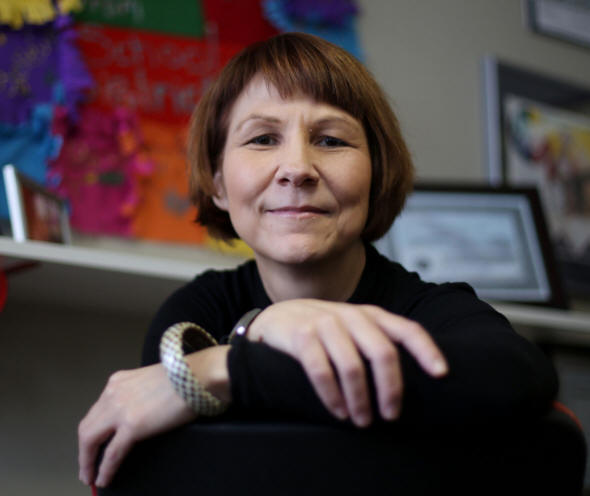
Cindy Blackstock knew something was up when officials threatened to cancel a 2009 meeting on aboriginal child welfare if she was in the room. So she dutifully sat outside the Parliament Hill office, watched by a security guard, while deliberations continued within.
Blackstock is executive director of the First Nations Child and Family Caring Society, a university professor, author and recipient of awards for distinguished service over 20 years in her field. The Ontario chiefs had invited her to the meeting specifically because she is an expert in child advocacy.
Baffled by what she terms the "extreme reaction" to her presence, she filed a request under the Privacy Act and in due course received a 2,500-page file on herself.
She was astounded by the findings.

Senate committee chastises Canada for its treatment of aboriginal children
Ottawa Citizen, CanWest News Service, by Juliet O'Neill, Friday, April 27, 2007
OTTAWA - Canada's treatment of its aboriginal children is "a national total disgrace," Senator Romeo Dallaire said Thursday as a Senate committee issued a report on the government's failure to comply with an international treaty on children's rights.
"They're living in the Third World," said Dallaire, a retired general who led a UN mission during the genocide in Rwanda in the mid-1990s. "You wonder if you're a colonial white man in black Africa," he said, recalling testimony that while Canada ranked among the top-five countries on a UN human development index, Canada's aboriginal population lagged in 78th place.

Child abuse, youth suicide rates rose significantly during pandemic: report
The National Post, Denette Wilford, September 1, 2021
The rates of child abuse and youth suicide attempts soared over the course of the last 17 months, according to a new report published Wednesday.
The health of kids across Canada has declined as they endure - and continue to endure - deteriorating mental health, food insecurity, child abuse, system racism, bullying, discrimination, and poverty, says Children First Canada. School closures and lockdowns played a huge role, as kids spent less time outdoors. Specifically, children in Ontario have experienced the greatest decline in outdoor play and time spent outside. The non-profit declared that children are in crisis, especially as more than six million children across Canada remain unvaccinated as they return to school this month, with no plans in place to protect them.
"Children made enormous sacrifices throughout the pandemic to protect their elders and keep our country safe, but as a society we have failed them," said Sara Austin, founder and CEO of Children First Canada, in a news release. "Their rights to an education, survival and development have been largely ignored, and the cost of social and political inaction is too high."
Suicide remains a leading cause of death for young people between the ages of 10 and 19, according to Statistic Canada. In fact, several children's hospitals saw significant spikes in admissions for suicide attempts during the pandemic.

Federal Court upholds landmark compensation order for First Nations children
The decision leaves Ottawa on the hook for billions of dollars in compensation
Olivia Stefanovich - CBC News - senior reporter Posted: Sep 29, 2021
The Federal Court today dismissed an application for a judicial review of a landmark human rights tribunal compensation order for First Nations children - leaving the federal government on the hook for billions of dollars in compensation related to the child welfare system.
Justice Paul Favel said today that the Attorney General of Canada, who had filed the application for a judicial review and a stay of the order from the Canadian Human Rights Tribunal, had "not succeeded in establishing that the compensation decision is unreasonable."
The federal government had argued that the tribunal overreached and was wrong to order Ottawa to pay $40,000 - the maximum allowed under the Canadian Human Rights Act - to each child affected by the on-reserve child welfare system since 2006.
The tribunal also said the parents or grandparents of those children (depending on who was the primary guardian) would also be eligible for compensation, as long as the children were not taken into the child welfare system because of abuse.
Favel wrote that the tribunal "reasonably exercised its discretion" under the Act to "handle a complex case of discrimination to ensure that all issues were sufficiently dealt with and that the issue of compensation was addressed in phases."
The Federal Court also upheld a tribunal ruling that ordered Ottawa to pay $40,000 to each First Nations child (along with their parents or grandparents) who were forced to leave their homes to access services, or who were denied services covered by the policy known as Jordan's Principle.
That policy states that the needs of a First Nations child requiring a government service take precedence over jurisdictional disputes over who should pay for it.
The Jordan's Principle portion of the order covers the period from Dec. 12, 2007 - when the House of Commons adopted Jordan's Principle - to Nov. 2, 2017, when the tribunal ordered Canada to change its definition of Jordan's Principle and review previously denied requests.
Favel dismissed the federal government's argument that the tribunal process was procedurally unfair.

Mom gave nude images of daughters, their friends to secret boyfriend
Clandestine photos and videos of her daughters and friends, taken while they changed clothes in a bathroom, were made to satisfy the sexual urges of her secret boyfriend.
The London Free Press, by Jane Sims, July 15, 2021
EDITOR'S NOTE: This story contains details that may disturb readers.
Clandestine photos and videos of her daughters and friends, taken while they changed clothes in a bathroom, were made to satisfy the sexual urges of her secret boyfriend.
She kept up the steady diet of images and text messages for almost a decade, while keeping up appearances as a wife, a mother, a Sunday school teacher and a school volunteer.
"I can't say how sorry I am. I don't expect forgiveness but I hope in time they will," the 52-year-old London woman said tearfully to Ontario Court Justice Allan Maclure before he sentenced her to four years in prison for voyeurism and five other child pornography counts.
"I have prayed for and will continue to pray for healing for all of the victims, because, with God, all things are possible and he can heal them. I'm so sorry," she said.
That was a bit rich for the judge. Before agreeing to a joint sentencing submission, Maclure took the woman to the judicial woodshed, calling what she did "depraved," "exploitive," "offensive," "perverted" and "utterly disgusting."
And what she said about a higher power healing everyone came off "as both offensive and trite."
"For you to so easily say God will heal them is to trivialize what's occurred to these children and their families and perhaps to trivialize your own responsibility," Maclure said.
The judge's sharp comments came after hearing what the woman did with her daughters and playmates during a 10-year extramarital affair, plus the emotional victim impact statements from parents who once called her a friend.

Headline in print newspaper
Disgusting Act
Headline in website edition
London, Ont. mom gave nude images of daughters, their friends to secret boyfriend
TORONTO SUN, By Jane Sim, July 16, 2021
52-year-old was sentenced to four years in prison for voyeurism and five other child pornography counts
London, ON - Clandestine photos and videos of her daughters and friends, taken while they changed clothes in a bathroom, were made to satisfy the sexual urges of her secret boyfriend.
Still, it was after their fourth baby died before Australian police suspected something was terribly wrong.
She kept up the steady diet of images and text messages for almost a decade, while keeping up appearances as a wife, a mother, a Sunday school teacher and a school volunteer.
"I can't say how sorry I am. I don't expect forgiveness but I hope in time they will," the 52-year-old London woman said tearfully to Ontario Court Justice Allan Maclure before he sentenced her to four years in prison for voyeurism and five other child pornography counts.
"I have prayed for and will continue to pray for healing for all of the victims, because, with God, all things are possible and he can heal them. I'm so sorry," she said.
That was a bit rich for the judge. Before agreeing to a joint sentencing submission, Maclure took the woman to the judicial woodshed, calling what she did "depraved," "exploitive," "offensive," "perverted" and "utterly disgusting."
And what she said about a higher power healing everyone came off "as both offensive and trite."
"For you to so easily say God will heal them is to trivialize what's occurred to these children and their families and perhaps to trivialize your own responsibility," Maclure said.
The judge's sharp comments came after hearing what the woman did with her daughters and playmates during a 10-year extramarital affair, plus the emotional victim impact statements from parents who once called her a friend.
A court-ordered publication ban is in place to protect the identities of the victims.
Assistant Crown attorney Andrea Mason told Maclure the London police found images of two sisters, one of whom was seven years old, and some of two other sisters from another family, on the man's electronic devices.
Police traced images to the sisters' mother, arrested her and searched her home. She admitted to the affair and to taking nude photos of her daughters and their friends to send to her boyfriend. The photos police found were taken between 2014 and 2020 showing her daughters in the bathtub, and all the girls dressing or undressing.

Unspoken abuse: Mothers who rape their sons
Ian* was just a child when his mother made him have sex with her. As a child he felt 'yucky about it'. As an adult he has realised the experience was incredibly damaging.
news.com.au, Ginger Gorman, January 21,2017
TRIGGER WARNING: This story discusses experiences of childhood sexual abuse, incest and suicide.
"I AM very sorry I brought you so much pain," Marcus* wrote in his final letter, "Thank you for caring for me. I know I didn't deserve it."
Marcus died by suicide two years ago and when he did, he left University of Canberra researcher Lucetta Thomas a message.
The sentence that stayed with her was this one: "The only course of action is for you to do something positive, like finish the PhD."
To an outsider, these could be understood as simple words of encouragement. Lucetta knew their real meaning; this was an urgent final plea.
The PhD she's currently writing is about sons who were sexually abused by their biological mothers - just as Marcus had been.

Canada Child Benefit program sees hiccups around outdated info, 'female presumption': AG
CTV News, Sarah Turnbull, CTVNews.ca Producer, February 25, 2021
OTTAWA -- The Canada Child Benefit is running smoothly, says federal auditor general Karen Hogan, aside from a few administrative deficiencies that impact eligibility for the support.
The auditor general also took note of a provision in the program that automatically awards the female provider in a household allocated payments.
The audit focused on whether the Canada Revenue Agency (CRA) "ensured that Canada Child Benefit (CCB) recipients were eligible for the benefit and that payments were made in a timely and accurate manner," and was part of Hogan's 2021 spring reports tabled in Parliament on Thursday.
Hogan found that the CRA was, for the most part, meeting its main objectives in the delivery of the CCB, but that at times, the agency was making payments based on "outdated" information.
"For example, in the sample we analyzed were instances in which the agency was not informed of changes, including the departure of a recipient from Canada. Payments continued until the agency received an adjustment to the account information or until the parent ceased filing a Canadian income tax return. In these circumstances, an amount would need to be repaid to the government," reads the report.
To mitigate this, Hogan recommends enhanced communication and information-sharing between federal agencies to fill in unnecessary gaps. She also recommends a requirement of a valid proof of birth at the time of the application, to raise the "integrity" of the program and to speed up the benefit process.
The report also raises concern with the concept of female presumption embedded in the CCB, which Hogan says fails to recognize diverse Canadian families.
"This concept appears in the Income Tax Act. Where the presumption is found to apply and is not rebutted, the program directs any payment to a female living with the child or children for whom the payment is made, because she is presumed to be the primary caregiver," reads the report.

Unmarried Ontario couple had no children and no house but man must still pay support, appeal court rules
In Ontario, being common-law spouses doesn't necessarily mean having lived in the same home, the court found
The Canadian Press, by Colin Perkel, September 10, 2020
TORONTO - A wealthy businessman will have to pay more than $50,000 a month in spousal support for 10 years to a woman with whom he had a long-term romantic relationship even though they kept separate homes and had no children together, Ontario's top court has ruled.
Under Ontario law, an unmarried couple are considered common-law spouses if they have cohabited - lived together in a conjugal relationship - continuously for at least three years. But that doesn't necessarily mean living in the same home, the court found.
"Lack of a shared residence is not determinative of the issue of cohabitation," the Appeal Court said. "There are many cases in which courts have found cohabitation where the parties stayed together only intermittently."
The decision comes in the case of Lisa Climans and Michael Latner, both of Toronto, who began a romantic relationship after meeting in October 2001. At the time, she was 38 and separated with two children, court records show. He was 46 and divorced with three children.
Although they maintained their separate homes, Latner and Climans behaved as a couple both privately and publicly. They vacationed together. He gave her a 7.5-carat diamond ring and other jewelry that she wore. She quit her job and would regularly sleep at his house. They travelled together and talked about living together.
Latner proposed several times and Climans accepted. He often referred to her by his last name. However, he insisted she sign a marriage contract and came up with several drafts. She refused.
B.C. legislation would keep addicted youth in care for maximum of seven days
VICTORIA - The mother of a teen who fatally overdosed says legislation in British Columbia that would allow youth to be involuntarily hospitalized for up to a week must be backed up with more residential treatment beds.
The Canadian Press, By Camille Bains in Vancouver, June 23, 2020
VICTORIA - The mother of a teen who fatally overdosed says legislation in British Columbia that would allow youth to be involuntarily hospitalized for up to a week must be backed up with more residential treatment beds.
Rachel Staples, whose 15-year-old son Elliot Eurchuk died in April 2018, said short-term emergency care meant to stabilize youth is just a start in addressing the overdose crisis among young people.
"They don't have the facilities to accommodate what's going on in our province," she said Tuesday, adding wait times could be as long as four months.
"A week in a hospital just makes a kid angry. Say they do decide 'Yeah, I want out of this nightmare.' Then what? They need residential treatment where they can be monitored."

Boys' next sense of purpose: 'Father warriors'
Opinion - by Dr Warren Farrell, The Washington Examiner, Washington DC, USA, Sunday, June 14, 2019
With Father's Day approaching, we are in need of clarifying how the role of dads in the past and present can prepare us for developing the best dads for our children's future.
Historically, each generation had its war. In each generation, a boy received "social bribes" such as being considered a "hero" if he risked dying so others could live. He soon absorbed that if he risked being disposable, his parents would be proud and that girls were more attracted to an "Officer and a Gentleman" than a "Private and a Pacifist." Serving either in war, or as his family's sole breadwinner, gave a boy his mandate for manhood - his "sense of purpose" as a man.
Today, the good news is both that fewer boys are needed to be disposable in war and that more women are sharing the burdens of the breadwinner role. The bad news is that this has left many boys with a "purpose void." As boys with a purpose void have become less-motivated men, more women are interested in having children without having "just one more child I have to support." Additionally, more children of divorce are raised without dads.
The result has been a global boy crisis in all 56 of the largest developed nations: of boys falling behind girls in virtually every area of academic achievement, mental health, physical health, and economic competence. But there is a gap: Boys with two involved parents are doing fine; boys whose dads are absent are not.
If the boy crisis resides where dads do not reside, this creates a new opportunity for consideration this Father's Day: Our sons can fill their purpose void by being honored as warriors not just if they risk killing and being killed overseas, but also if they become "father warriors" by loving and being loved at home.

Vancouver police investigating after dead baby found in Downtown Eastside
Vancouver Sun, Tiffany Crawford, April 24, 2020
Vancouver police are investigating after a dead baby was found in a portable toilet in the Downtown Eastside on Wednesday night.

Flowers mark the spot at Hastings and Main streets in Vancouver, BC Thursday afternoon April 23, 2020 where a baby was found deceased inside a portable toilet late Wednesday. Police are investigating. Photo by Jason Payne
"This is, without a doubt, an extremely tragic incident," said Vancouver police Const. Tania Visintin in a statement Thursday.
Vancouver police investigating after dead baby found in Downtown Eastside on Wednesday night.
"This is, without a doubt, an extremely tragic incident," said Vancouver police Const. Tania Visintin in a statement Thursday.
PHARMACARE - OHIP+
Free prescriptions for many children and young adults in Ontario set to end in March
The Toronto Star, Rob Ferguson, Queen's Park Bureau, Fri., Jan. 4, 2019
Free taxpayer-funded prescriptions to children and young adults under 25 will end in March if they have private insurance coverage.
The looming change in the OHIP+ pharmacare program, expected to save $250 million a year, was first announced in late June as Premier Doug Ford's Progressive Conservatives took power but the time frame for implementation remained a mystery until now.
"The government is fixing OHIP+ by focusing benefits on those who need them the most," said a notice posted online on a government website this week putting the proposal out for public comment until the end of January.
Sources said the government hopes to have the necessary systems in place with insurers and pharmacies by late March.
Under the new plan, children and young adults will continue to get free prescriptions if they or their parents do not have private health insurance coverage.
Otherwise, private insurance plans become the "first payer" for prescription medicines.
At issue is how pharmacists will be able to verify whether customers under 25 have private coverage, or deductibles or co-payments.
WHO considers adding 'parental alienation' to new diagnostic guide
CTV National News, Avis Favaro, Medical Specialist, Saturday, March 30, 2019
An emerging mental health issue in which one parent turns a child against the other parent could be added to the international standard for diagnostics next month.

"Parental alienation" may be among an updated list of diseases and related health problems when the World Health Organization votes to accept the 11th revision of the International Classification of Diseases (ICD-11) in May.
The issue is a kind of psychological manipulation of a child. It occurs when one parent systemically "badmouths" the other parent. In extreme cases of high-conflict divorce and separation, the child may align with one parent and reject the other. Mental health experts and law professionals are lining up to label it as a form of emotional abuse that can damage the mental health of children.
Research in the field has labelled parental alienation an "unacknowledged form of family violence" and has found long-term mental health consequences for children who experience it, including anxiety, lowered self-esteem and general quality of life, as well as a greater risk of depression.
Canada Child Benefit Increases July 2018
Boost to Canada Child Benefit comes into effect
CTV News, Friday, July 20, 2018
If you are eligible for the Canada Child Benefit program, your monthly payment could soon be increasing.
Effective Friday, the federal tax break is being indexed to inflation, which means an increase to keep up with the growing cost of living.
The federal government announced in the fall its plan to annually boost its marquee program two years earlier than initially planned.
The maximum annual amount per child children under age 6 is increasing to $6,496, from $6,400.
The maximum annual amount per child children aged 6 through 17 is increasing to $5,481, from $5,400.
A newborn baby was found on a porch in a shoebox in Laval. Police are investigating.
The Canadian Press, Montreal, Laval, Friday, April 26, 2019
Laval police say a newborn baby left in a shoebox earlier this week was in stable condition Friday and her mother could face charges stemming from the discovery.
They received a 911 call around noon Wednesday from a woman who said someone left the baby girl in a box on her balcony.
Const. Stephanie Beshara says not long after, an area hospital informed them of an 18-year-old who was seeking treatment following childbirth but had no baby with her.
Police allege the woman gave birth alone in an apartment and left it on her neighbour's balcony in the city's Chomedey district.
They estimate the baby spent between 90 minutes and two hours outside while temperatures hovered around seven degrees.
Beshara says the woman has been placed under arrest, but investigators haven't spoken to her because she has been receiving medical treatment.
Supreme Court to explain reasons for tossing charges against mom who had sex with minor
CanadianCRC editor commentary:
This article contains sexist wording that would never have been used had the rapist been a man and it was sex with the 14 year old female.
We have highlighted the sexists words in red. REVERSE the genders on this story and see how it looks. What a double standard!
35-year-old Saskatchewan woman mistakenly thought 14-year-old boy was of age to consent
CBC News, By Kathleen Harris, CBC News, Jul 06, 2017
The Supreme Court of Canada will explain Friday why it threw out sexual assault charges against a woman who had sex with ( try sexually assaulted) the 14-year-old friend of her son.
In May, justices ruled that Saskatchewan resident Barbara George, who was 35 at the time of the sexual encounter, should not face a new trial for sexual interference and sexual assault. It will present written reasons for that decision.
The crux of the case is around age of consent, and a section of the Criminal Code that requires an adult to take "reasonable steps" to determine the age of a person before engaging in sex with them.
George was acquitted of the charges because the trial judge found the sexual activity was "factually consensual" - that she honestly believed the boy was at least 16, and there was reasonable doubt she had not taken all reasonable steps to determine the age of "C.D.," whose full name is protected by a publication ban.
He was attending a party at her home the night of the encounter.
According to documents filed by the appellant with the Supreme Court, George assumed C.D. was over the age of 16 because he had facial hair, a mature demeanour and apparent sexual experience. He also smoked and took care of his younger siblings.
Change the gender and see how this looks: And if the above read that "The girl had a mature body with large mature breasts and curved hips, a mature demeanour and apparent sexual experience. He also smoked and took care of his younger siblings. "
According to the documents, George did not realize how old he was until several months later, when she applied to become an RCMP officer. One of the questions on the questionnaire asked if she had ever had sexual activity with someone under 16.
RCMP application leads to charges
After checking with her son about the age of C.D., she answered the form in the affirmative.
That led to an RCMP investigation and subsequent charges laid against her.
George was acquitted at trial. While the judge said she exhibited an "appalling lack of judgment" by talking to the complainant in her bedroom for several hours that night, there was not enough evidence to show she deliberately broke the law.
The Saskatchewan Court of Appeal, in a majority decision, allowed the Crown's subsequent appeal, sending the matter to the country's highest court.
"This case involves a 35-year-old woman who was the sole parent and adult at a high school party when she had sexual intercourse with a boy who was half her age and young enough to be her teenage son," reads a court document filed by the respondent, the Attorney General of Saskatchewan.
"Despite all of that, she took no steps to ascertain the complainant's age before she had sex with him. In fact, she did not turn her mind to the issue of the complainant's age at all until months later."
In 2008, the Conservative government led by Stephen Harper raised the legal age of consent in Canada from 14 to 16, the first change to the law since 1892.
Ontario chief pathologist slammed by judge for offering 'incorrect' opinions in court
A Toronto judge released a blistering ruling this week slamming the chief pathologist for offering opinions that were "not appropriate, not within his knowledge and expertise, and incorrect."
The Toronto Star, April 13, 2017
Dr. Michael Pollanen was appointed the province's chief pathologist in 2006, as it became clear the dangerously flawed expert testimony of Dr. Charles Smith had led to serious miscarriages of justice.
In the 11 years since, he has led a forensic pathology overhaul to make sure the same mistakes don't happen again.
This irony was noted by the Toronto judge who released a blistering ruling this week slamming Pollanen for falling into the same traps that led to wrongful convictions he helped overturn.
Despite being unprepared, "he offered expert opinions on matters that were not appropriate, not within his knowledge and expertise, and incorrect," Superior Court Justice Anne Molloy wrote.
The case involved a man who was accused of the second-degree murder of his girlfriend's 2-year-old son, Nicholas Cruz.
It is agreed the toddler died after blunt force trauma to his stomach caused his intestines to rupture. Doctors also found new and old bruises on the toddler's body.
The accused, Joel France, has since pleaded guilty to manslaughter but has not yet been sentenced.
PATERNITY FRAUD-Baby Name Falsified /Changed by Mother
Judge criticizes 'devious' woman who changed boy's name without father's consent
The Canadian Press, Friday, February 24, 2017
SYDNEY, N.S. -- A judge has harshly criticized a Nova Scotia woman who changed her son's last name without consent from his father, calling her conduct "devious, manipulative and indefensible."
Justice Theresa Forgeron said the mother arranged to forge the father's signature on an application to change the boy's name.
"(The mother) was strategic and manipulative throughout," said Forgeron in a written decision from the Supreme Court Family Division in Sydney, N.S.
"(Her) story does not have an internal consistency or logical flow, nor is it in harmony with the preponderance of probabilities which a practical and informed person would find reasonable given the particular place and conditions."

"Birthgasms" - more than myth: This midwife had one
Mothers orgasming during birth of baby- Women's Sexuality
Global TV News, By Patricia Kozicka, December 15, 2015
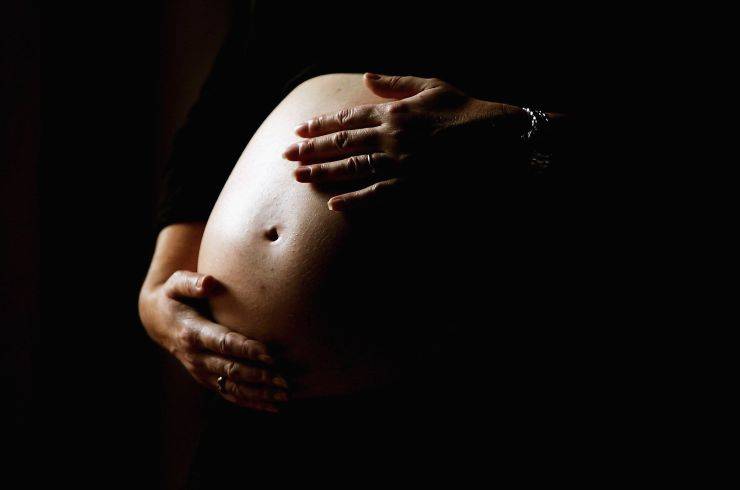
Childbirth doesn't have to be a completely painful experience.
Photo by Ian Waldie/Getty ImagesAn orgasm is probably not the first thing that comes to mind when you think of childbirth.
But those who've had a "birthgasm," as it's called, will tell you the pain of childbirth can very suddenly turn to pleasure.
In a literary review published last month in the Journal of Holistic Nursing, Australian researchers write that the phenomenon is more common than you'd think - but few women feel comfortable talking about it.
"The sexuality of childbirth is not well recognized in Western society," the review reads. It calls for "greater awareness … of the potential of orgasm as a means of pain relief in childbirth."
Elizabeth Davis, director of the U.S. National Midwifery Institute, kept her "orgasmic birth" a secret for almost 20 years. She was afraid people would think she was crazy.

Mother murdered eight-year-old son after he walked in on her having sex with his grandfather
Mother sentenced to 30 years in jail after prosecutors call her an 'egocentric, manipulative liar'
The Independent, UK, October 20th, 2016

A mother has been found guilty of beating and strangling her eight-year-old son to death, after he walked in on her having sex with his grandfather.
Veronica Panarello was sentenced to 30 years in jail at a court in south-east Sicily after it emerged she had strangled her son Loris Stival with electrical cables, and thrown his body into a ditch near the family home.
Teen girl pleads guilty to second-degree murder of Saskatoon baby
CTV National News, October 12, 2016
A 16-year-old girl has pleaded guilty to second-degree murder in the death of a six-week-old boy in Saskatoon last summer.
The teen, who cannot be named under the Youth Criminal Justice Act, entered the plea in court on Wednesday.
She was invited into the home where Nikosis Jace Cantre was found beaten on July 3.

Mom sought men to sexually assault girl, 10, before death: Warrants
The Associated Press, Published Wednesday, September 14, 2016
ALBUQUERQUE, N.M. USA -- The mother of a 10-year-old New Mexico girl found dead and dismembered told police she sought men online and at work to sexually assault her daughter, according to warrants obtained by the Albuquerque Journal.
Michelle Martens told police that she had set up encounters with at least three men to sexually assault her daughter, the Albuquerque Journal reported. The child's death sparked vigils and outcry across the state.
Martens, 35, told investigators that one of the men was a co-worker. Two others she met online, including Fabian Gonzales, 31. He was to be the last.
Martens, Gonzales, and Jessica Kelley -- a cousin of Gonzales -- all face charges in connection with Victoria Martens' death.
Police found Victoria Martens' dismembered body last month inside the apartment she shared with her mother.
According to the warrants, Martens told investigators she didn't do it for the money. Martens said she set up the sexual assaults because she enjoyed watching.
Mississauga Ontario Disability Support Program Office (ODSP) incompetence and beating up sick disabled people
Opinion
Nadia Mustillo, Program Manager for ODSP, including the Mississauga ODSP office can't even get the publicly available employee's directory right or is it the fault of Ontario's Ministry of Community and Social Services Deputy Minister Janet Menard's who broke her October 2015 commitment to the president of the Canadian Children's Rights Council to fix the problem. The directory shows only one manager out of 3 for the Mississauga Office. The ODSP Mississauga managers, as verified on May 4th, 2016 are actually Christine Linsley, Denise Ryckman and Paula Banfield.
Tiffany Lundrigan an ODSP Mississauga caseworker took a year to process $479, one month's shelter allowance as well as shelter for more than 15 months.

Update: Up to 60 sensitive files possibly breached at Alberta's maintenance enforcement program
The Edmonton Journal, by MARIAM IBRAHIM, April 4, 2016
An Alberta government employee is under investigation after Edmonton police discovered as many as 60 sensitive files in the province's maintenance enforcement program may have been accessed inappropriately.
The alleged privacy breach was discovered during a larger police investigation, Justice Minister Kathleen Ganley said Monday.

Nova Scotia female, 15, arrested after child porn allegedly shared online
The Canadian Press, Thursday, March 24, 2016
WINDSOR, N.S. - A 15-year-old Nova Scotia girl has been arrested for allegedly sharing child pornography on social media, and police say more arrests are possible.
The girl is facing charges of producing, possessing and distributing child pornography after an adult came forward to police in the Windsor area Wednesday, said RCMP Cpl. Jennifer Clarke.
There is more than one alleged victim, and all are believed to be Nova Scotians.

Children's advocate calls for end to lockout at Hamilton teen jail
Province should step in to reopen Arrell Youth Centre says rights group
The Hamilton Spectator, Jun 30, 2018, by Joanna Frketich
 Members of Ontario Public Service Employees Union Local 216 hold picket signs at the corner of Stone Church and Anchor Roads outside Banyan, the not-for-profit organization that runs the Arrell Youth Centre, in April. - Hamilton Spectator file photo
The Canadian Children's Rights Council is calling for an end to a labour dispute that has closed a Hamilton youth detention facility for more than two months.
No new talks are scheduled after negotiations broke down June 24 in the ongoing lockout at Arrell Youth Centre at 320 Anchor Rd. near Stone Church Road East and Dartnall Road.
The centre, which normally houses 16 young men convicted or accused of serious crimes, has been empty since the lockout began April 27. Most of the 16 teens who were moved stayed in the west region, which includes London, Guelph and Niagara. But three had to go to the east region, which stretches as far as Kingston.
"It undermines the whole idea of rehabilitation," said Grant Wilson, president of the nonprofit advocacy council. "That's a life-altering experience to go through that kind of labour disruption when you are a youth ... It's destructive to everybody."

Liberals agree to revoke spanking law in response to TRC call
Truth and Reconciliation Commission said in its final report that "corporal punishment is a relic of a discredited past and has no place in Canadian schools or homes"
OTTAWA The Globe and Mail, Canada's largest national newspaper, Sunday, Dec. 20, 2015, by Gloria Galloway
In promising to enact all of the recommendations of the Truth and Reconciliation Commission, the federal Liberals have agreed to remove a section of law that allows parents to spank their kids without fear of prosecution.
Groups that oppose corporal punishment of children have spent many years urging successive governments in Ottawa to repeal Section 43 of the Criminal Code that permits parents and teachers to use reasonable force to correct the behaviour of youngsters in their care.
The Truth and Reconciliation Commission, which heard thousands of tales of physical abuse inside Indian residential schools, said in its final report that "corporal punishment is a relic of a discredited past and has no place in Canadian schools or homes." The repeal of Section 43 was No. 6 on a list of 94 "calls to action" included in the report, which was made public last week.
When asked if Prime Minister Justin Trudeau's promise to act on every TRC recommendation meant repealing the so-called spanking law, a spokesman for Justice Minister Jody Wilson-Raybould would only say the government remains committed to implementing all of the commission's calls to action.
In 2004, the Supreme Court of Canada ruled that physical force was acceptable within certain bounds - it cannot be used on children under the age of 2, it cannot involve implements such as a paddle or a belt and blows to a child's head are not allowed. Teachers and faith-based groups praised the decision, saying the people who are responsible for raising children must have the leeway to decide when moderate physical discipline is required.
Peel group calls for GTA African-Canadian children's aid society
A black community group in Peel recommends mandatory collection and sharing of race-based data on Ontario kids in care.
The Toronto Star, By: Jim Rankin, Feature reporter, Sandro Contenta, News, Wed Dec 09 2015
The Ontario government should make it mandatory for all children's aid societies to collect and make public race-based data on kids in their care.
The recommendation - along with a call for an African-Canadian society to support Toronto-area black families - is included in a position paper by the Black Community Action Network (BCAN) of Peel. It will be released Wednesday morning at a Brampton conference of Peel community leaders and children's aid society officials.
"The collection and dissemination of that data is critical to be able to assess whether the kinds of services that we have available are effective, to hold some of these agencies accountable for the kinds of services they are delivering," Dr. Julian Hasford, the paper's author and a community psychologist, said in an interview.
"I don't think that we're going to be able to make informed and effective decisions with respect to system change without that information."
The group also wants the Peel Children's Aid Society to follow the lead of the Children's Aid Society of Toronto and report publicly on the proportion of children in care - and the number of families involved with the society - who are black.
December 4, 2015
Liberals under pressure to fix Ontario's child protection system
( above is headline The Toronto Star newspaper website )
website version - In more than half of child abuse investigations reviewed by auditor general Bonnie Lysyk's office, the children's aid societies failed to make mandatory checks of the Ontario Child Abuse Register.
Child protection system needs urgent fix: AG
( above is headline The Toronto Star newspaper, page A4 )
newspaper version - Aid societies failed to check Ontario Child Abuse Register, leaving some kids at 'risk'
The Toronto Star, Friday Dec. 4 , 2015, by Sandro Content, staff reporter and Jim Rankin Feature reporter,
The Ontario government is under pressure to fix a child protection system criticized by the auditor general for putting some children in "serious risk."
In her report, Bonnie Lysyk describes a child protection system riddled with problems, from badly conducted abuse investigations to a floundering Ministry of Children and Youth Services that fails to oversee Ontario's privately run children's aid societies.
At stake are the lives of 15,625 children who, on average, were in foster or group-home care in 2014-15, and the well-being of thousands more investigated for possible abuse.
In more than half of child abuse investigations reviewed by Lysyk's office, the children's aid societies failed to make mandatory checks of the Ontario Child Abuse Register. The register would note if caregivers had a history of abuse.
"Failure to conduct these crucial history checks puts children in serious risk of being placed or left in the care of individuals with a history of abusing children," Lysyk's report states.

Ottawa female teen prostitution ringleader gets 6½-year adult sentence
Young woman, who was 15 when she was arrested, led operation that trafficked other teen girls
CBC News Nov 04, 2014
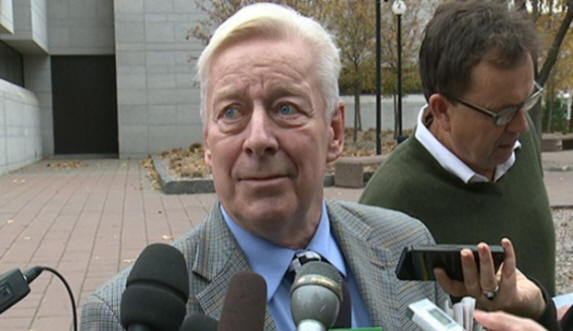
An 18-year-old who led an operation that trafficked other teenagers using social media sites such as Facebook and Twitter today received an adult sentence of 6½ years in a correctional facility. The young woman was given credit for time she's already served in pre-sentence custody, meaning she will only serve another two years and 325 days.
The 18-year-old was arrested in 2012, when she was 15, for leading the operation with two other teens as they recruited other girls through social media sites like Facebook and Twitter, before drugging and beating them and forcing them into prostitution.
The 18-year-old was the only one who pleaded not guilty in her trial, but she was found guilty this January. The two other teens entered mid-trial guilty pleas in September 2013 for their roles in the violent pimping operation.
Under the Youth Criminal Justice Act, the 18-year-old faced a maximum sentence of three years. Under the adult Criminal Code, she faced a minimum sentence of five years.
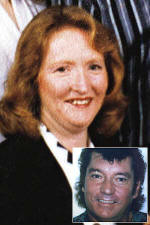
Katherine Knight - Psycho Husband Killer - Domestic Violence
This real "Hannibal Lecter" psychopath killer was a woman.
TOO HORRIFIC FOR NEWSPAPERS TO PUBLISH OR GENDER BIAS?
 'We had to make a decision whether the story was palatable for
people to read with their breakfast in the morning. A decision
was made this couldn't be reported. It was too horrific,' said
Peter Lalor, journalist with The Australian.
'We had to make a decision whether the story was palatable for
people to read with their breakfast in the morning. A decision
was made this couldn't be reported. It was too horrific,' said
Peter Lalor, journalist with The Australian.
Psychopathic husband killer Katherine Knight of Australia butchered her husband , skinned him and cooked him up for the children. This has to be the worst case of domestic violence we have ever seen.
Knight methodically skinned Price's corpse, taking off the entire skin, including his face, ears, scalp and neck, like a ghoulish suit. The macabre suit of skin was then hung up on a hook in the entrance of the house, where it remained until it was removed by the horrified police officers.

Woman charged after 6 dead babies found in Winnipeg storage locker

Winnipeg Sun, by David Larkins, Wednesday, October 22, 2014
WINNIPEG - Winnipeg police now say the bodies of six babies were found in a U-Haul locker Monday afternoon and have made an arrest in connection to the horrifying incident.
Police provided an update Wednesday morning and said it was not three or four infant bodies as originally thought that were found in the storage locker.
Andrea Giesbrecht, 40, of Winnipeg, who police say also goes by Andrea Naworynski, has been charged with six counts of concealing the body of a child and one breach of probation. She was arrested at a home, police said.
The offences are alleged to have occurred between March 7 and Oct. 20.
Police spokesman Const. Eric Hofley could not provide much more detail on how the babies were killed, why they were there, or what their relation is to the accused.
Hofley said the case has not been turned over to the homicide unit because more details still need to come to light on many lingering questions.
Hofley said homicide charges have not been laid, but have not been ruled out.
"So many of the questions that I expect you have will be answered forensically," Hofley said. "As you can see by the charges laid, right now we don't have any information regarding a homicide."
Hofley said the child abuse unit is still investigating, but acknowledged finding the answers may prove difficult.
"It's early in the investigation ... some of these questions may never be answered," he said.
Nova Scotia Home for Colored Children 1921-1989
Key deadline in orphanage lawsuit could turn 'the page
with the history of racism in Nova Scotia'
If five or more former residents withdraw from the $29 million class-action settlement by Monday, the terms of the agreement would allow the provincial government to pull out of the deal.

Tony Smith, right, arrived at the orphanage as a five year old in 1965. He says he suffered physical and sexual abuse during his 3 ½ years in the home, an experience echoed by dozens of former residents who have since come forward with their own stories.
Canadian Press, Published on Sun Aug 17 2014, ( Toronto Star, August 18, 2014 )
HALIFAX-Fifteen years after going public with his story of child abuse, Tony Smith says he can't believe the day has come when a multi-million-dollar settlement involving a Halifax-area orphanage stands on the verge of being finalized.
The deadline for opting out of the $29-million class-action settlement is Monday, a day the self-described survivor of the Nova Scotia Home for Colored Children says is a dream come true.
"It's like a burden had been lifted off of my back," Smith said in an interview. "I never thought it would happen."
Former residents of the home allege they suffered physical, psychological and sexual abuse mostly at the hands of caregivers while living in the orphanage, which opened in 1921 and operated for nearly 70 years.
"It was a Woman" - Documentary on Female Sex Offenders - Predators
This is a very interesting 45 minute film telling the story of a female who was sexually abused by a woman and how she sought treatment and recovered. It features some of the best sources of treatment and authorities about female sex offenders.
Made in 2013, the documentary includes an interview with Dr. Franca Cortoni, a Clinical Forensic Psychologist who has over 10 year experience studying female sex offenders, a therapist who treats victims of female sexual predators, and highlights the problems for people sexually abused in small communities in which sexual abuse is common. It illustrates some of the reasons that victims of female sexula predators can't physically escape the presence of their abusers.
Canada failing homeless youth, report charges
Stress on emergency assistance, not prevention, solves little in the long run, professor says.

Professor Stephen Gaetz says homeless youth are thrust into adult roles before their time and the transition is often traumatic.
The Toronto Star, by Leslie Ferenc, GTA, Mon Mar 03 2014
Canada falls short of meeting the needs of homeless youth by treating them as adults and expecting shelter care to solve the problem, according to a new report.
Many youth find themselves "languishing in a shelter for four or five years when they should be in school learning to be an adult with the supports they need . . . instead of rushing them to be adults, living in poverty and becoming chronically homeless adults," says report author Stephen Gaetz, a professor in York University's education faculty and director of the Homeless Hub (Canadian Homelessness Research Network).
"By continuing to emphasize emergency supports, as important as they are, rather than prevention or rapid rehousing, our strategy is simply to manage the problem," he said.
Gaetz is author of Coming of Age: Reimagining the Response to Youth Homelessness in Canada which was released Monday.
Four years of foreplay and afterthoughts on sex-ed: Cohn
Ontario's archaic sex-ed curriculum dates from the 1990s, long before Facebook, smart phones and same-sex marriage. Time to get with the times.
The Toronto Star, by Martin Regg Cohn, Provincial Politics, Published on website, Wed Jul 23 2014 and in the newspaper July 24, 2014
A day after winning the premiership in early 2013, Kathleen Wynne promised to fix one of the lingering embarrassments of her predecessor's reign.
The incoming premier vowed to tackle Ontario's outdated educational curriculum - a product of the Mike Harris era - by modernizing its pre-Internet approach to sex-education and mental health topics.
Ottawa girl 17 found guilty on 30 of 33 charges in teen pimping case
The Canadian Press, January 29, 2014
OTTAWA - An Ottawa teen who befriended girls on Facebook and other social media, then forced them to work as escorts, has been found guilty of 30 of 33 charges against her.
The 17-year-old - identified as the ringleader of the group - was found guilty Wednesday on counts including human trafficking, forcible confinement, assault, robbery, sexual assault, child luring and distributing child pornography.
Woman, 22, charged after girl, 15, rescued from sex trade at Burlington, Ont., hotel
Canadian Press, January 24, 2014
BURLINGTON, Ont. - An investigation into sex trade workers operating from hotels led police to a teenage girl they allege was forced into prostitution in Burlington, Ont.
Halton regional police say they rescued the 15-year-old victim and laid human trafficking charges against a 22-year-old woman.
UN rights committee grills Vatican over its handling of child sex abuse
The Associated Press, USA, Published Thursday, Jan. 16 2014, By John Heilprin And Nicole Winfield
The dressing down came in the unlikeliest of places, a stuffy United Nations conference room before an obscure human rights committee. After decades of fending off accusations that its policies and culture of secrecy had contributed to the global priest sex abuse scandal, the Vatican was called to account.
UN experts interrogated The Holy See for eight hours on Thursday about the scale of abuse and what it was doing to prevent it, marking the first time the Vatican had been forced to defend its record at length or in public.
It resembled a courtroom cross-examination, only no question was off-limits, dodging the answer wasn't an option and the proceedings were webcast live.
The Vatican was compelled to appear before the committee as a signatory to the UN Convention for the Rights of the Child, which among other things calls for governments to take all adequate measures to protect children from harm and ensure their interests are placed above all else.
The Holy See was one of the first states to ratify the treaty in 1990, eager to contribute the church's experience in caring for children in Catholic schools, hospitals, orphanages and refugee centres. The Holy See submitted a first implementation report in 1994, but didn't provide progress reports for nearly two decades until 2012.
Saskatoon woman charged with murder in young boy's death
CBC News, Jan 05, 2014
Saskatoon police have charged a 35-year-old woman with first-degree murder after a five-year-old boy was found dead in a west side home.
Initially investigators questioned a person of interest, who was charged late Saturday night. The 35-year-old woman is accused of first-degree murder in the boy's death.
Female newlyweds flock to join cheaters club
Married women - especially new brides - are not just fantasizing about affairs, they're going out and having them.

Ashley Madison has seen female newlywed membership in the GTA jump from 3,184 to 12,442 in the past year - an almost 300 per cent increase.
CanadianCRC editor's commentary:
The Canadian Children's Rights Council provides information and statistics on infidelity which can result in babies and paternity fraud. Infidelity is extremely damaging to parents' relationships and therefore also to children.
It is in the best interests of children to be raised in families with committed parents. Obviously a person who is "sexually frustrated" right after he or she marries should examine why he or she got married at all to that particular person or anyone,
A credible poll of 5,000 women found that about half would lie to their husband about the identity of their child should they become pregnant as a result of sex with a man other than their husband. See paternity fraud statistics and poll.
The Toronto Star, by Nicole Baute, Living Reporter, Published on Wed Apr 07 2010
Susan first dipped her toe into the murky cyberpool of infidelity two years ago, when she was bored at home on a day off from her part-time fitness job. Her husband, a business executive seven years her senior, was working, as usual.
Sexually frustrated and a little lonely, the 25-year-old started Googling "sex club" and "swingers club" before stumbling upon AshleyMadison.com, advertised as a "discreet dating service" for people in relationships. Like most Torontonians, Susan, who did not want her real name used, heard about it before.
Good parenting key to breaking cycle of poverty
The one sure predictor for success among children from poor families is a strong relationship with an adult.
Toronto Star, Opinion / Commentary, Nicole Letourneau / Justin Joschko Saturday October 26, 2013
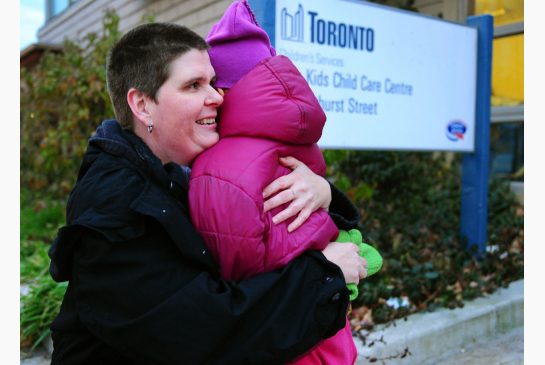 Â
Toronto mom Becky McFarlane, seen here with daughter Levia, is one of 3
million Canadians who grew up in poverty, escaped it and now is struggling to keep away money problems.
Â
Toronto mom Becky McFarlane, seen here with daughter Levia, is one of 3
million Canadians who grew up in poverty, escaped it and now is struggling to keep away money problems.
More than one in seven Canadian children currently lives in poverty. That number has climbed steadily since the 1990s, and comes with very real consequences - both social and economic.
Children raised in poverty suffer from a disproportionate amount of health problems, have less education and are more likely to live in poverty as adults. This in turn hurts our economy, as we struggle with higher rates of crime and joblessness, steeper health care costs, fewer income taxes and a sagging social safety net.
All told, poverty has been calculated to cost Canada $72-$84 billion a year - that's between $2,299 and $2,895 per Canadian annually.
Unfortunately, poverty is as complex as it is costly, and our attempts to eliminate it have met with limited success. Yet there is cause for hope. As we come to better understand why child poverty leads to such poor outcomes - what precise factors are at play - it becomes easier to develop real and lasting solutions.
Murdering Mother sentenced to more than two years jail time in connection to death of infant son
The Toronto Star, by Jennifer Pagliaro, News reporter, Published on Wed Apr 03 2013
A woman has been sentenced to 27 months in prison in connection to the death of her nine-week-old son in a bizarre case where the infant boy's body has yet to be recovered.
Both parents Ricky Ray Doodhnaught, 32, and Nadia Ayyad, 24, have been implicated in the case that dates back to November 2011 when Children's Aid workers along with York Regional Police attempted to seize two children under a court order from a Vaughan home.
Doodhnaught fled from police and CAS workers at that time. Only one child was located and removed from the home. Police believed Doodhnaught had taken their son George with him.
After Doodhnaught was arrested several weeks later on Dec. 6 and the boy was not located, he told police his son, who was born prematurely, had died on or around Nov. 1. The homicide unit was called in to investigate.

Laws Overlook Female Offenders
By Julia Hislop, a licensed clinical psychologist, is the author of "Female Sex Offenders: What Therapists, Law Enforcement and Child Protective Services Need to Know" and a co-author of "Female Sexual Abusers: Three Views."
New York Times, U.S.A., February 21, 2013
While no one who has researched sex crimes believes that females comprise more than a very small percentage of all sex criminals, a number of factors conspire to keep these women from being detected and prosecuted.
Studies consistently find that a vast majority of both male and female victims of female sex offenders tell no one. Girls face the task of convincing others that females can be abusive and that touch between females can be sexualized. Males are not socialized to report victimization. Their physiological responses can also confuse the issue of consent, leaving them puzzling to explain how, if an erection was present, there was still abuse, or how, if there was not, that sexual acts still occurred.
Canadian Jewish Rabbi Stated on TV Show That All Parents Should Choose to Have Their Newborn Daughters and Sons Circumcised ( Ritual Genital Mutilation or Female Genital Cutting)
Organisations from around the world were stunned to hear Rabbi Baruch Frydman-Kohl of the largest conservative Jewish congregation in North America state on TV that " all parents should have their children circumcised".
Rabbi Frydman-Kohl is the senior rabbi at Beth-Tzedec Congregation in Toronto, Ontario, Canada with 2,700 member families, the largest conservative Jewish congregation in North America.
The CHCH TV show "Square Off", which aired at 5:30pm on July 4, 2012 in Toronto, Ontario, Canada, was in reaction to the decision of the German court to ban ritual genital cutting of males in that country.
Advocating on the show for the rights of the child was Grant Wilson, president of the Canadian Children's Rights Council which opposes the genital mutilation, ritual genital cutting or circumcision of both male and female children. He pointed out that Jewish baby girls have an automatic covenant with God when they are born but Jewish baby boys do not until their genitals have been mutilated.
Mr. Wilson pointed out the double standard in the laws of Canada, a country in which it is a criminal offence to cut the genitals of baby girls but which allows male ritual genital cutting.
What's "Normal" in Canada and the United States isn't the "Norm" elsewhere
The USA is the most male circumcised nation on earth and not for religious reasons. In countries like Japan and Australia males circumcision is virtually none existent with the exception being certain Muslims and Jews.
Mr. Wilson also raised the issue of other stakeholders being heard in the public debate about Male Genital Mutilation such as Arab-Canadians, Muslims and Egyptian-Canadians, some of whom practice both Male Genital Mutilation (MFM) and Female Genital Mutilation FGM) and have for thousands of years as both a religious ritual and tradition. They can perform ritual genital cutting on their baby boys but not their baby girls.
The World Health Organization study of 2008 states that 92.5% of married Egyptian women have been circumcised and over 50% of school age young girls.
Rabbi Frydman-Kohl also stated that 5% of all male genital mutilations done by rabbis involve the rabbi sucking the blood from the cut penis of the baby. Baby boy deaths have be reported in New York from this practice. A rabbi gave a baby herpes and the baby died. Do a search on the Internet for " Baby dies Herpes circumcision" .
Grant Wilson, president of the Canadian Children's Rights Council stated " All children should be protected from ritual genital mutilation or cutting. We question by Jewish baby girls have an automatic covenant with God but baby boys don't until they have been through a traumatic, shocking genital mutilation. Canada protects baby girls from female genital mutilation of all 4 types categorized by the World Health Organization", some of which are less invasive than the genital mutilation done on boys."
On this TV show Rabbi Frydman-Kohl explained that Jews would fight to the death to preserve the male genital cutting.
CHCH TV Show - Male / Female Genital Mutilation - Rabbi Baruch Frydman-Kohl Beth-Tzedec and Grant Wilson, president, of the Canadian Children's Rights Council - July 4, 2012 Watch the TV Show
Baby Dies from Herpes After Controversial Ritual Genital Cutting
Two-week-old baby who died of herpes 'contracted disease through circumcision'
The Daily Mail, UK, By Daily Mail Reporter, 4 March 2012
The death of an baby boy who contracted herpes has been linked to a controversial circumcision ritual.
The two-week-old infant was struck with the disease after being circumcised as part of an Orthodox Jewish ceremony.
During the ritual, the presiding rabbi removes blood from the cut using his mouth.
The practice persists despite the health risks, with babies at risk of contracting diseases which are relatively harmless to adults but could be fatal for children.
The latest casualty of the tradition was the unidentified boy who died at Maimonides Hospital in Brooklyn, New York in September, according to the Daily News.
His official cause of death was 'disseminated herpes simplex virus Type 1, complicating ritual circumcision with oral suction'. The identity of the mohel - a religious official who specialises in circumcisions - is unknown.
This is not the first time that an infant has died as a result of the ultra-Orthodox ritual of metzizah b'peh, which is the practice of using the mouth to remove blood. A baby boy died in New York in 2004 after undergoing the ceremony. Health experts have criticised the ritual on the ground that it involves 'inherent risks' to infants' health.
However, the practice seems to have originated as a way of avoiding infection by cleaning the open wound in ancient times.

Fathers demand mandatory paternity testing
The Australian, Patricia Karvelas, February 16, 2011
A men's rights group has called for mandatory paternity testing of all babies after government figures revealed almost 600 instances of men compelled to financially support children they did not father.
Since changes to child support laws four years ago, there had been 586 cases of men successfully using DNA testing to show they were not biologically related to children they had been financially supporting, the federal government has revealed to The Australian.
CBC Website Poll - "Should spanking be allowed under Canadian law?" February 2012
After a major scholarly paper reviewing the damaging effects of physical punishment of children over the last 20 years was published in the Canadian Medical Association Journal, February 2012 , the Canadian Broadcasting Corporation ( CBC ) had a website poll. The question was "Should spanking be allowed under Canadian law?". Over 6,000 votes were cast.
The comment by the Canadian Children's Rights Council became the number 1 comment with a rather violent 2nd comment made by a mother who struck her child. Her comment was assault under the current Criminal Code of Canada, section 43, which is exactly why the Canadian Children's Rights Council want's section 43 repealed. Parent's don't know what is and is not allowed and the Supreme Court of Canada spanking case judgement. It is problematic. We have the survey results.
'Right to spank' law called public health threat
Law permitting physical punishment at odds with public health messages
CBC, February 6, 2012
The Criminal Code's justification for physical punishment of children such as spanking should be removed, Canadian researchers say.
Monday's issue of the Canadian Medical Association Journal includes a paper reviewing how the understanding of the effects of physical punishment of children has shifted dramatically in 20 years.
Children who have experienced physical punishment tend to be more aggressive toward parents, siblings, peers and, later, spouses, and are more likely to develop antisocial behaviour, said Joan Durrant, of the department of family social sciences at the University of Manitoba and Ron Ensom of Children's Hospital of Eastern Ontario in Ottawa.
Physical punishment is also associated with a variety of mental health problems, such as depression, anxiety and use of drugs and alcohol.

Boys raised by traditional families 'do better at school'
Boys raised in traditional families are more likely to perform well at school and avoid suspension than those brought up by single mothers, it has emerged.
The Telegraph, UK, By Graeme Paton, Education Editor, 03 January 2012
Boys brought up by single mothers are more likely to struggle, according to the report by the University of Chicago.
In a major study, researchers said family structures had a much more significant effect on boys' early education than school type or even the gender of teachers.
It found that boys were much more likely to misbehave, be excluded from school and go on to achieve low grades after rebelling against "emotionally distant" parents.
The pattern is particularly marked in single-parent families where mothers "invest disproportionately less in their sons or feel less warm toward them" than daughters.
The disclosure comes amid continuing concern over the gender gap at the heart of the education system.

Success, in contempt
Globe Editorial
The Globe and Mail ( Canada's largest national daily newspaper ), 20 May 2009,
Family courts are not supposed to reward abusive parents, and punish parents who play by the rules. They are not supposed to allow an abusive parent to nullify the responsible parent's role in a child's life. But that is exactly what an Ontario court has done in a case of parental alienation. It has, in effect, disposed of the child's father, perhaps permanently.
Tasnim Elwan has been given permission to take her nine-year-old girl from Canada to Saudi Arabia, where she will have "a seven-bedroom home with two nannies," thanks to Ms. Elwan's wealthy new spouse. The nine-year-old hates her father because he abandoned her - or so she thinks. When he managed, with the RCMP's help, to trace her to Saudi Arabia after her mother in effect kidnapped her, and made his way to that country for 10 days, he was permitted just 15 minutes with her. Some abandonment. And now he is to be allowed one telephone call a month, which the judge doesn't expect Ms. Elwan will allow, anyway.
Ms. Elwan makes no secret of her disgust with her former spouse, Ayman Al-Taher, a chaplain at Mount Sinai Hospital in Toronto. She calls him a mentally disturbed supporter of Hamas and al-Qaeda. If those accusations were true, asked Mr. Justice Leonard Ricchetti, why then did she agree, in a formal, court- approved settlement, to allow him any access to their daughter? And why, he asked, make that settlement if she never intended to comply with its terms? (She was found in contempt of court for taking her child to Saudi Arabia.)
Scholarly Paper on Parental Alienation
Parental Alienation - Myths, Realities & Uncertainties: A Canadian Study, 1989-2008
May 12, 2009, by Nicholas Bala, Suzanne Hunt & Carrie McCarney, Faculty of Law, Queens University, Kingston, Ontario, Canada
Alienation cases have been receiving a great deal of public and professional attention in the past few months in Canada. As with so many issues in family law, there are two competing, gendered narratives offered to explain these cases. Men's rights activists claim that mothers alienate children from their fathers as a way of seeking revenge for separation, and argue that judges are gender-biased against fathers in these cases. Feminists tend to dismiss alienation as a fabrication of abusive fathers who are trying to force contact with children who are frightened of them and to control the lives of their abused former partners. While there is some validity to both of these narratives, each also has significant mythical elements. The reality of these cases is often highly complex, with both fathers and mothers bearing significant responsibility for the situation.
Two of the many findings are:
-
Mothers are twice as likely as fathers to alienate children from the other parent, but this reflects the fact that mothers are more likely to have custody or primary care of their children; in only 2 out of 89 cases was a parent with only access able to alienate a child from the other parent.
-
Fathers made Remore than three times as many unsubstantiated claims of parental alienation as mothers, but this too reflects the fact that claims of alienation (substantiated and unsubstantiated) are usually made by access parents, who are usually fathers.

Four-year-olds in Montreal will use laptops in kindergarten class
Computer World Canada, By Jennifer Kavur, Sep 02, 2008
A pilot program led by Lester B. Pearson School Board (LBPSB) in Quebec will provide HP 2133 Mini-Note notebook PCs to four-year-old students this fall. The Kindergarten for Four-Year-Olds program will distribute 100 laptops among five Montreal-area schools and the International Language Centre in Pointe-Claire.
According Bob Mills, director general of LBPSB, the program will enhance learning opportunities by incorporating technology as part of a total education package. Research has show that the use of technology by three- and four-year-olds develops gain in intelligence, non-verbal skills, structural knowledge such as long-term memory and manual dexterity, he said.
Read More ..

Surrogate mothers: Outsourcing pregnancy in India
The practice of renting a womb and getting a child is like outsourcing pregnancy. This trade's business volume is estimated to be around $ 500 million and the numbers of cases of surrogacy are believed to be increasing at galloping rate in India.
MeriNews, By Joseph Gathia, June 23, 2008
India - THE MINISTRY of Women and Child Development is examining the issue of surrogate motherhood in India for bringing up a comprehensive legislation. But surrogate motherhood - as an arrangement, in which a woman carries and bears a child for another person or persons, but takes no ownership of the child born - has also raised moral, ethical, social and legal questions about both the woman and the commissioned baby.
To understand the issues involved, let us see the case of Surekha. She is seven-months pregnant like any other expecting mothers, except that the child she is carrying isnt her own. When Surekha gives birth to this child in India, the newborn will be immediately be handed over to its biological parents, Non Resident Indians (NRIs) who live in Canada and who have been unable to bear a child on their own. In return for renting her womb, Surekha will be paid one lakh rupees.
This practice of renting a womb and getting a child is like outsourcing pregnancy. The business volume of this trade is estimated to be around $ 500 million and the numbers of cases of surrogacy are believed to be increasing at galloping rate.
Quebec man wants name stricken from birth certificate of child who isn't his
The Canadian Press, March 30, 2009
MONTREAL A Quebec man who has failed to have his name removed from the birth certificate of a young girl he found out was not his biological daughter wants to argue his case before the Supreme Court of Canada.
The businessman has already struck out in Quebec Superior Court and in the Quebec Court of Appeal.
Both courts ruled that paternity is ironclad if a man's name is on the birth certificate, if that status is not contested within a year of the child's birth and if other factors, including the same family name, indicate obvious bonds between the child and the parents.
The courts ruled there is little room for interpretation, but the man's lawyer disagreed with both rulings.
Child Porn - An international issue. The Internet knows no national boundaries. Many Countries don't even have child porn laws. Let's go after them.
Read about how other countries that feed child porn into Canada over the Internet don't even have their own criminal laws and how they fail to protect their own children while their citizens such as hotel owners make money in the sex tourism trade.
The damage to families when false allegations are made.
In Toronto, Ontario, a few years ago, a medical doctor was accused of being a child pornographer. His medical practice was ruined. He was found not guilty in criminal court but committed suicide because of the stress. His reputation was ruined and there was no way to retract the damage done to him by the media coverage made when he was charged. He had subscribed to adult pornography on the internet and his credit card had been charged. The same company providing the adult porn had been providing child porn to others and used the same company to charge credit cards.








CanadianCRC editor's commentary:
The article below was published in 2013. On May 11, 2018, Dr. Cindy Blackstock was awarded the Order of Canada for her advocacy work to provide a better life for First Nations children.